3 Ways Movement is Supporting Mental Health Around the World
Movement can be a powerful tool for mental health. Project HOPE is using physical activity to help people affected by crisis find connection, confidence, and moments of joy.
Mental healthcare doesn’t always happen sitting across from a therapist.
Sometimes it happens on a yoga mat. On an archery range. On a field where children can run, play, and simply be kids again.
Physical activity can have transformational benefits for mental health, helping reduce stress and anxiety, boost mood, and build confidence and connection. Around the world, Project HOPE incorporates movement into mental health support for children and adults coping with extraordinary circumstances.
Here are a few of the ways we are using physical activity to help people find connection, resilience, and healing.
Physical activity can have transformational benefits for mental health, helping reduce stress and anxiety, boost mood, and build confidence and connection.
Ukraine: Helping Veterans Build Strength and Connection
As a growing number of Ukrainian veterans return home to their communities, many navigate uncertainty, isolation, and the difficult process of finding their place in civilian life. Access to psychological support for veterans has emerged as one of the greatest war-related challenges.
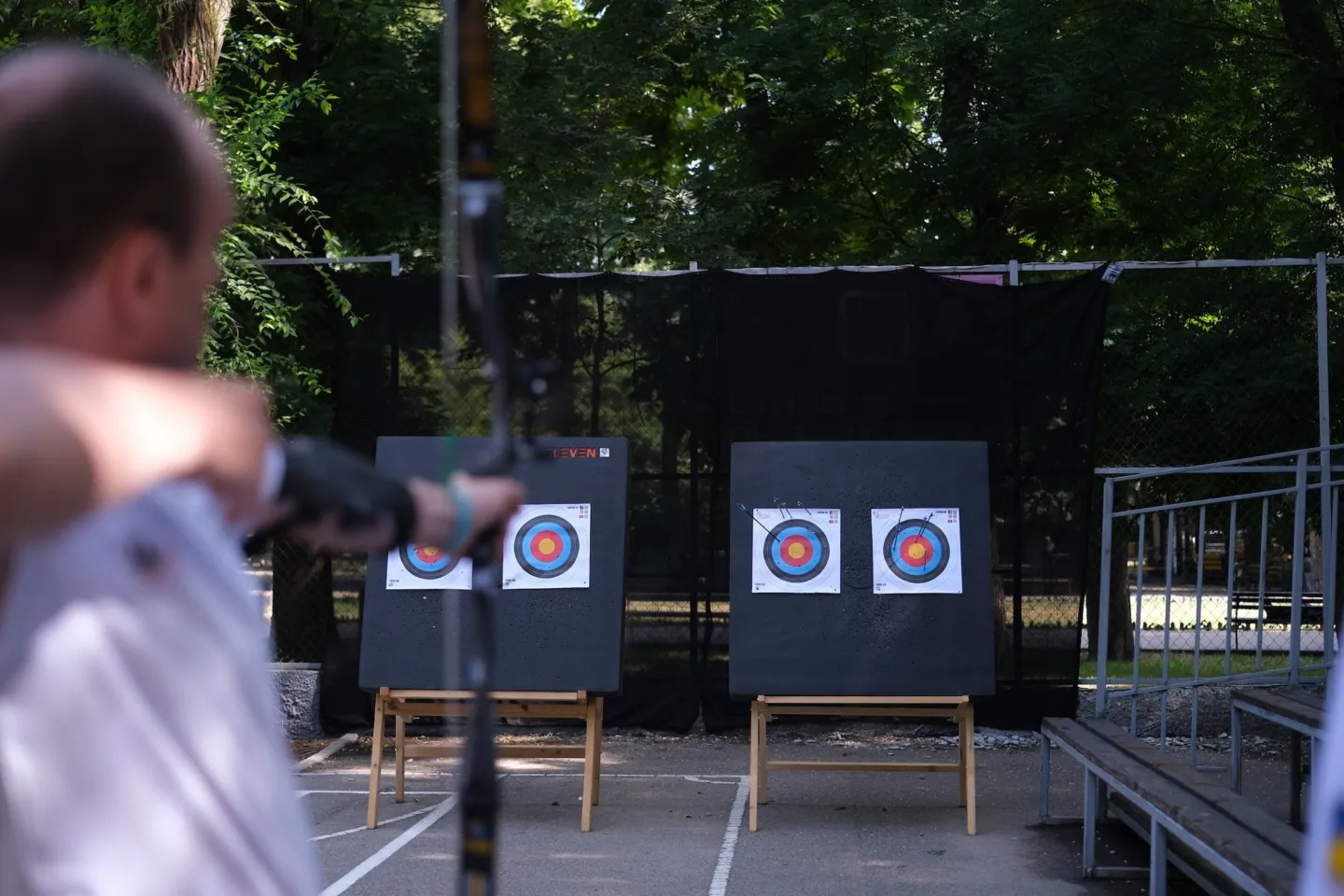
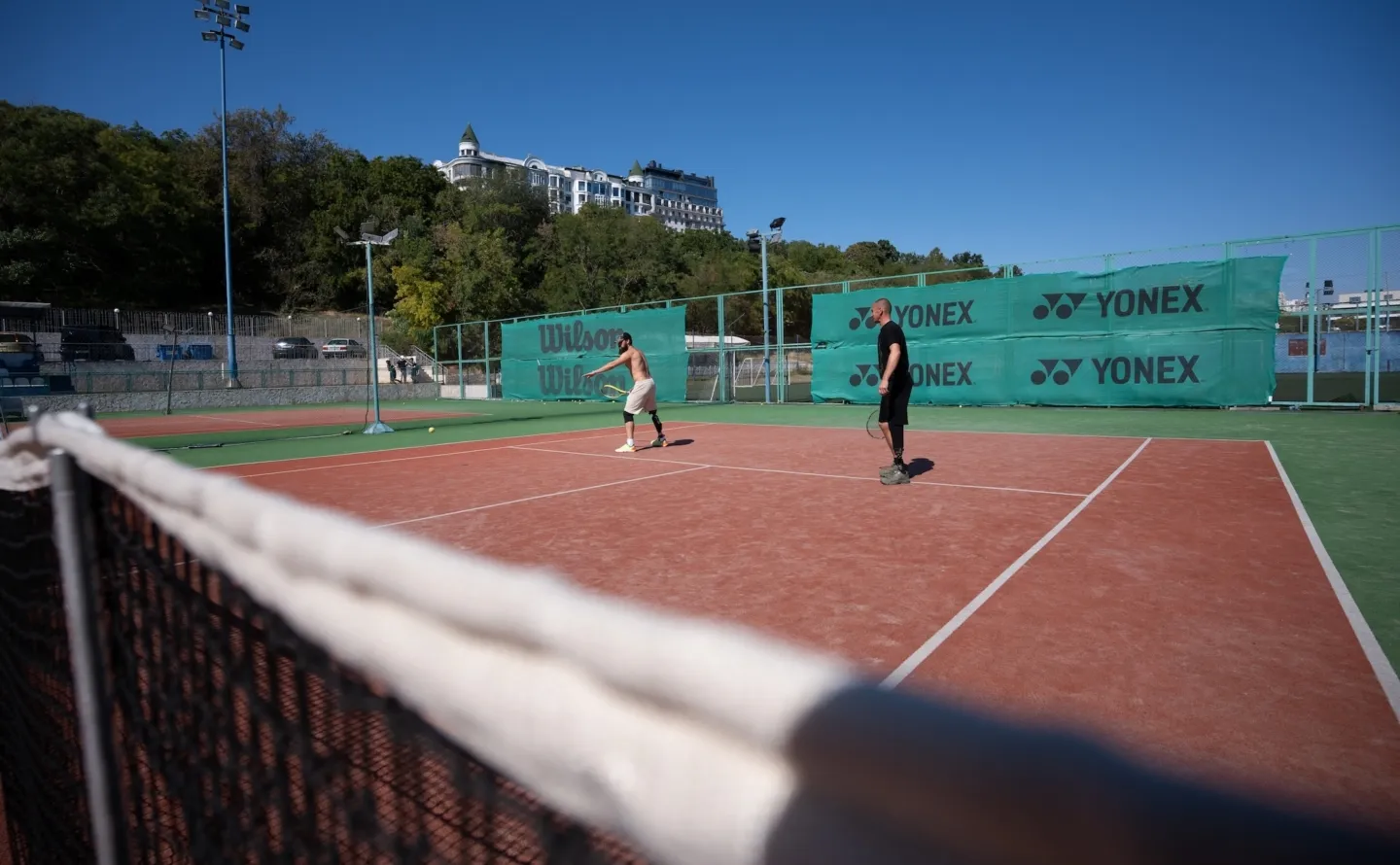
Recovery involves more than physical rehabilitation. It also means supporting mental health, relationships, and a new sense of belonging and purpose. Project HOPE is supporting opportunities for veterans to reconnect with others and rebuild their confidence through adaptive sports, including rowing, tennis, weightlifting, and archery.
“Recovery is not only about healing injuries, but also about rebuilding a life: physically, mentally, and socially,” says Caine Cortellino, Program Director at Project HOPE. “Adaptive sports create a critically important pathway for this process.”
For Roman, sport has helped him regain confidence in his physical abilities and feel more connected to others.
“It’s not only about physical activity, but it also helps psychologically,” he says. “You feel like you are needed in society again.”
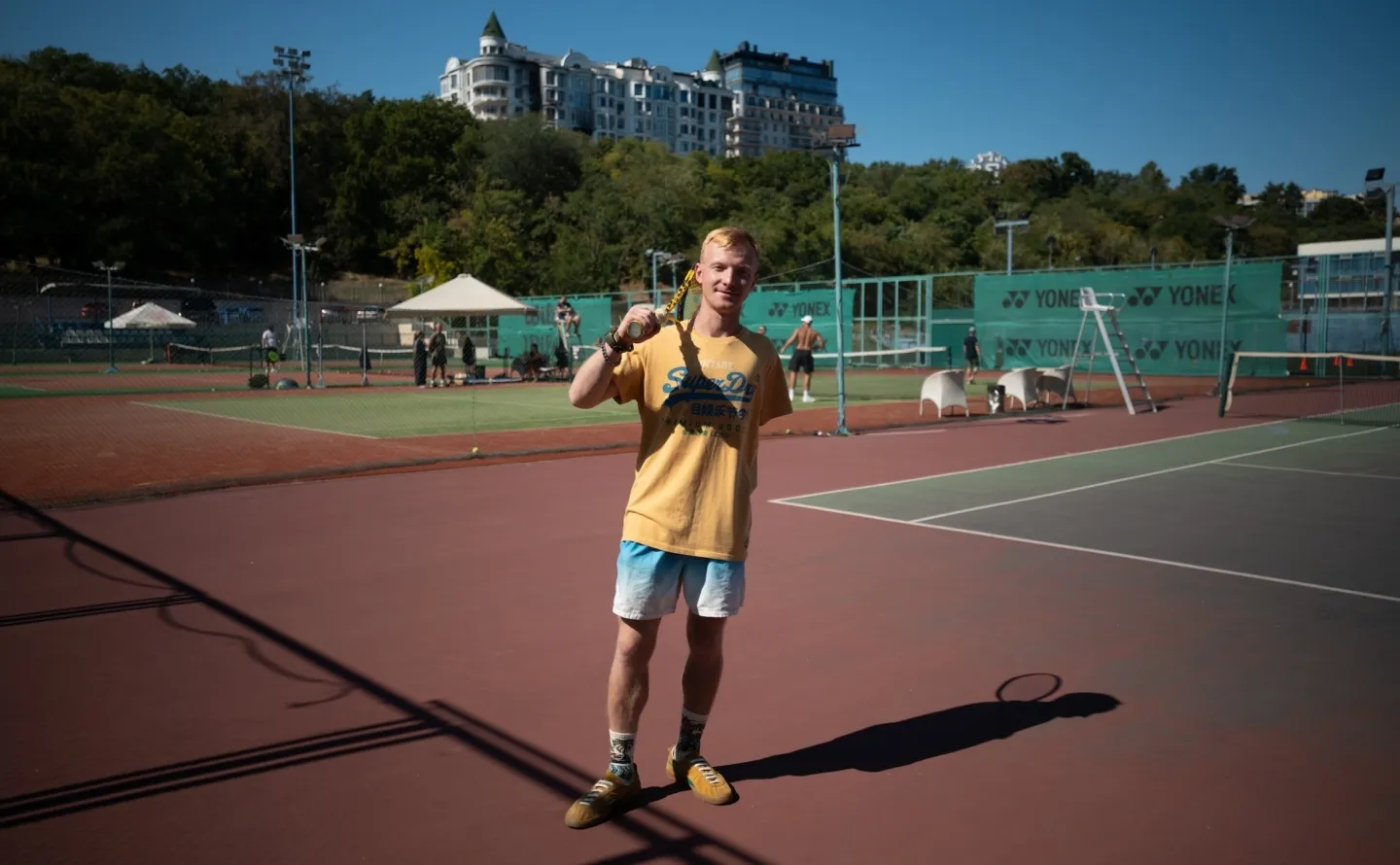
For 26-year-old Oleksandr, adaptive tennis and amputee football offer another path to recovery. Through sport, he is finding opportunities to connect with others and feel fully engaged in his life. Project HOPE supports local organization Vilni Voiny (“Free Warriors”) in expanding opportunities for veterans like Oleksandr to participate in adaptive tennis, helping them stay active while experiencing the teamwork, community, and sense of belonging that sport can provide.
“Veterans often face serious challenges when returning to civilian life — both physical and psychological,” says Valentyna Okhothichenko, a mental health and psychosocial support officer at Project HOPE. “Supporting initiatives that help them feel connected and part of a community again is essential.”
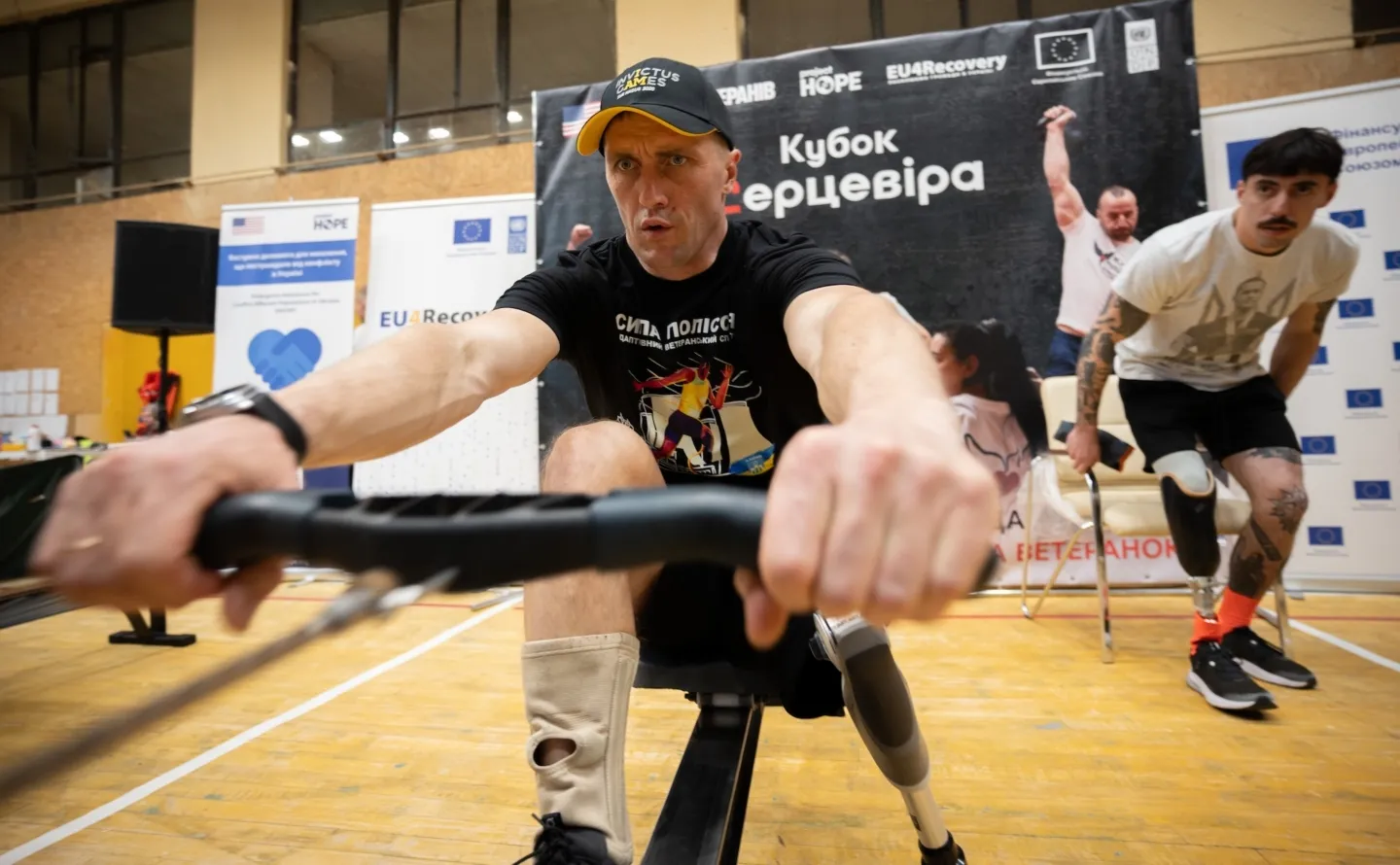
Roman participates in the Sertsevir Cup in Chernihiv, Ukraine on April 4-5, 2026. The event brought together veterans from all over Ukraine to participate in a range of adaptive sports. Photo by Nikita Hlazyrin for Project HOPE, 2026.
Tennis and amputee football offer Oleksandr more than physical activity: they help him connect with others, regain confidence, and feel fully engaged in life. Photo by Nikita Hlazyrin for Project HOPE, 2026.
Project HOPE’s support for adaptive sports helps veterans overcome isolation, build supportive relationships, and regain a sense of belonging and self-worth. Photo by Nikita Hlazyrin for Project HOPE, 2026.
Gaza: Creating Space for Play Amid Crisis
For children living through conflict, opportunities to play, connect, and simply be kids can be hard to come by. In Gaza, prolonged conflict and displacement have brought extraordinary levels of stress and uncertainty, leaving few opportunities for children to experience those moments of normalcy.
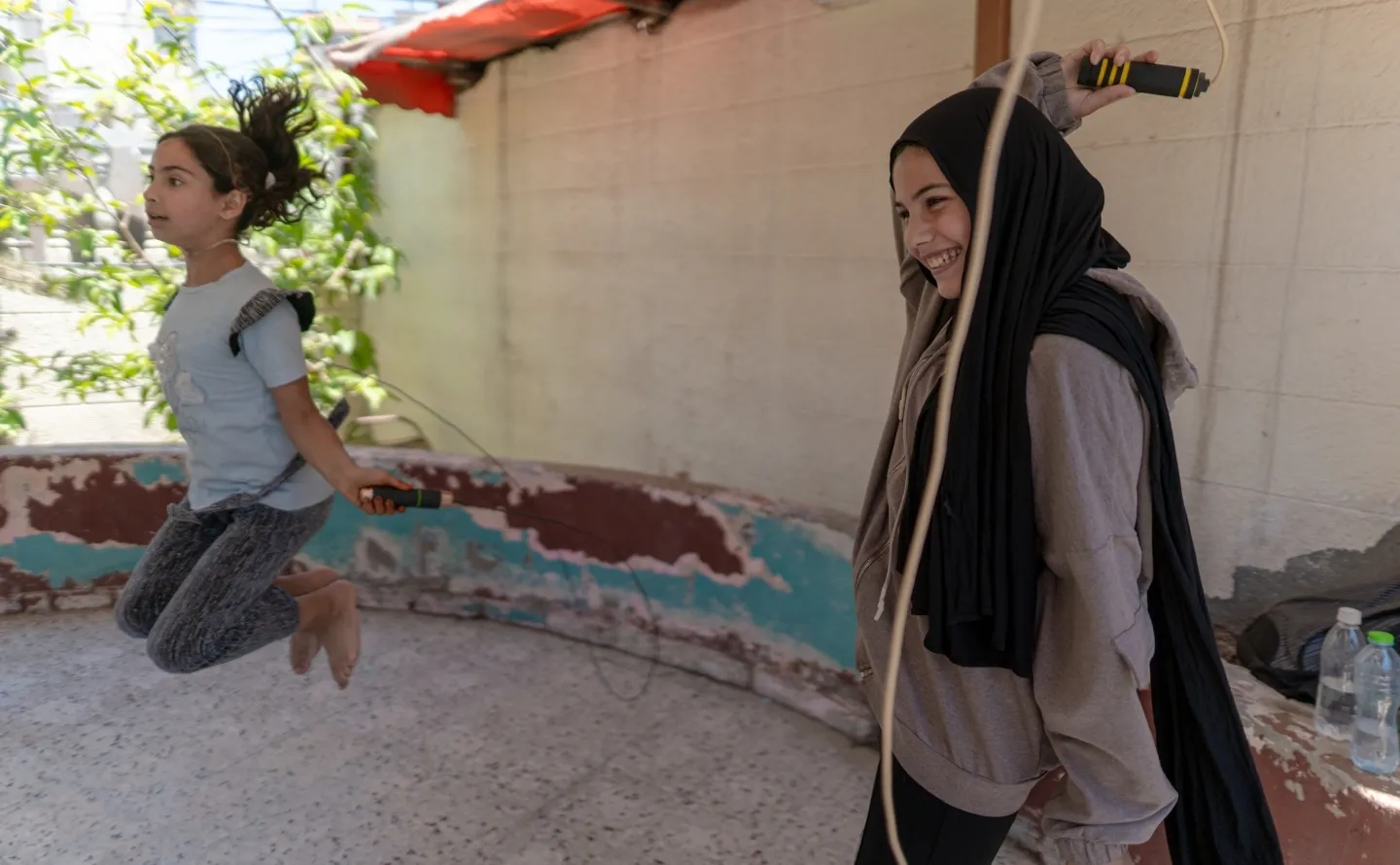
At Project HOPE’s safe spaces, recreational activities from jumping rope to group games give them an opportunity to move, connect with each other, and express themselves.
“When children enter the space, we often see them move from being quiet, anxious, or withdrawn to becoming engaged, expressive, and full of energy,” says Al Ataf, a Project HOPE Child Protection Officer. “Through play, art, learning, and group activities, they can express their emotions, build positive relationships, and regain a sense of normalcy.”
At Project HOPE’s safe spaces, recreational activities from jumping rope to group games give children an opportunity to move, connect with each other, and express themselves.
These moments of movement and play provide an important outlet for children experiencing fear, anxiety, and stress.
“These spaces also help reduce stress, fear, and anxiety, and provide an outlet for emotional expression,” says Alaa, a Project HOPE Community Health Promoter.
“Our child-friendly spaces are much more than places for play; they are spaces for safety, healing, and hope during a time filled with stress and uncertainty,” Al Ataf says.
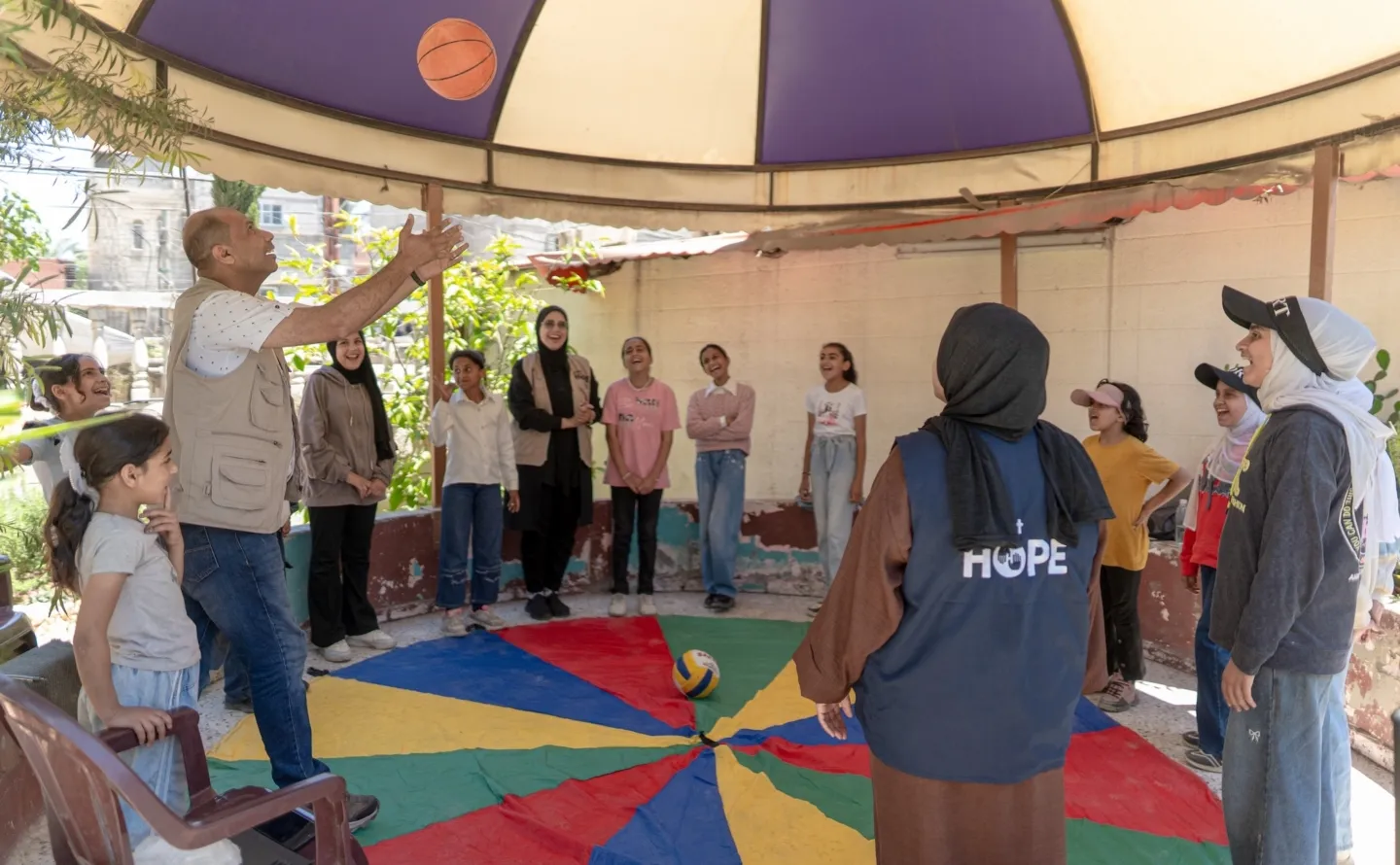
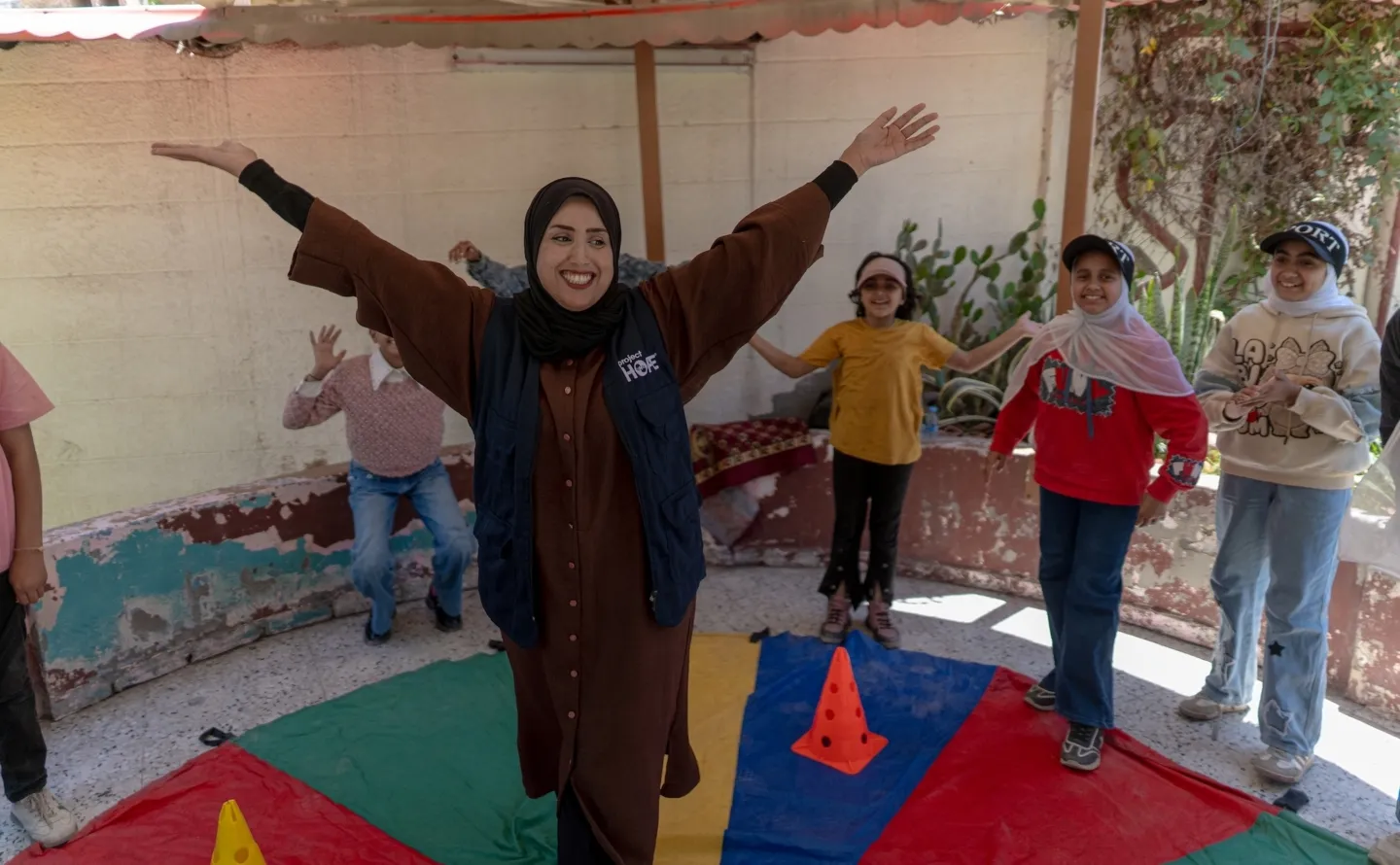
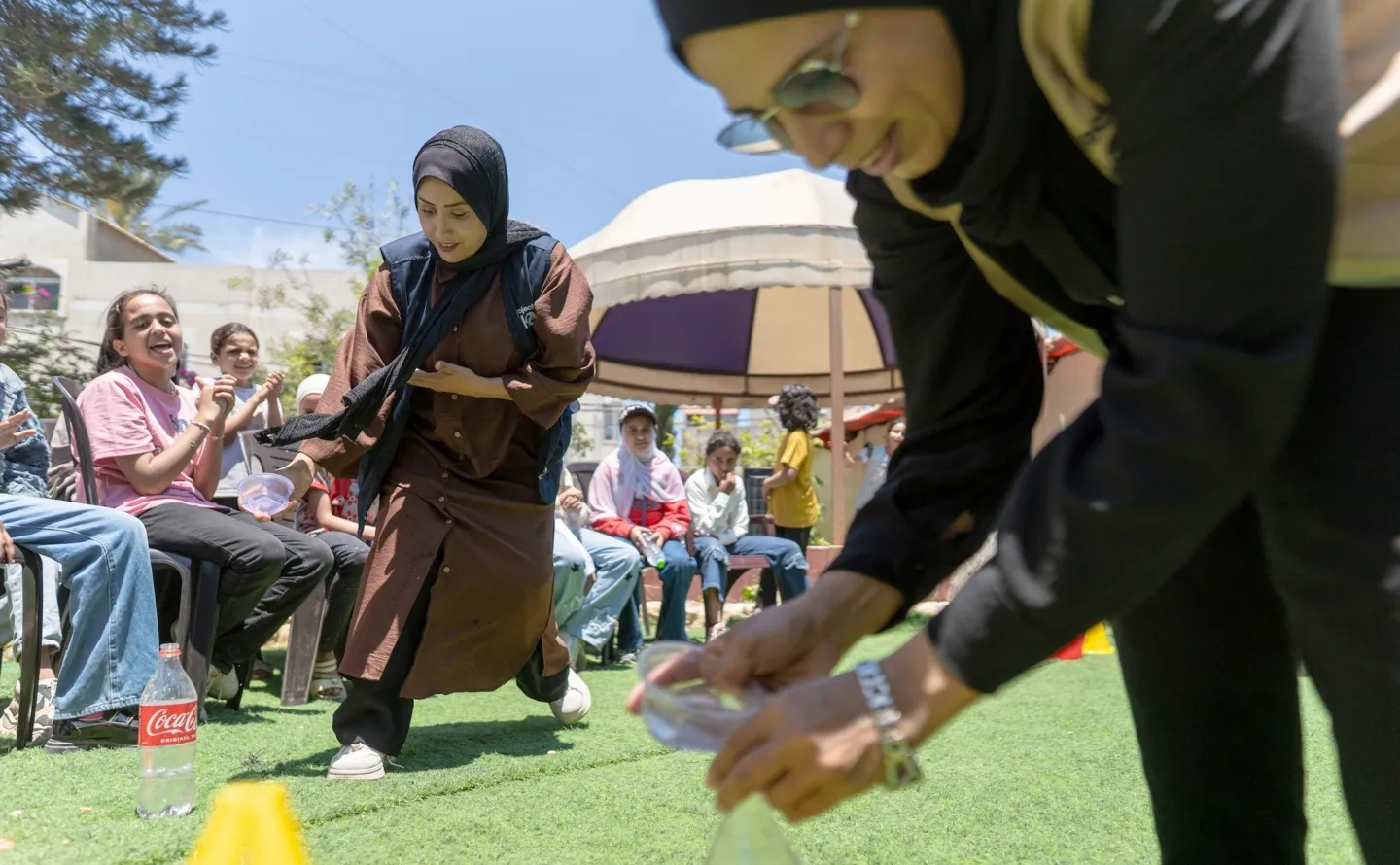
Children take part in a group recreational activity with Al Ataf, a Project HOPE Child Protection Officer (left), and Alaa Younis, a Project HOPE Community Health Promoter (right), at Project HOPE’s Al-Tayara clinic in Deir al-Balah, Gaza. Photos by Jaber for Project HOPE, 2026.
Girls jump rope at a Project HOPE child-friendly space in Gaza. Through activities like jumping rope, children have a chance to move, play, and experience moments of normalcy amid prolonged conflict and displacement.
Poland: A Place for Refugees to Build Resilience
The mental health effects of conflict can continue long after a family has reached safety. For children displaced by war, adapting to life as a refugee can mean navigating separation, a new environment, and the loss of familiar routines and communities.
More than four years after the full-scale invasion of Ukraine began, over one-third of the country’s children remain displaced. Many have been forced to start new lives in neighboring countries.
In the Malopolske region of Poland, Project HOPE’s mobile mental health and psychosocial support teams bring care directly to remote refugee communities, combining counseling with recreational and social activities to help children connect and cope.
“Many Ukrainian children in Poland are adapting to a new environment while remaining affected by separation, uncertainty, and the ongoing war at home,” says Marta Stoian, MHPSS specialist at Project HOPE. “Structured movement and play can offer predictability, positive social experiences and opportunities for self-expression at a time when many other aspects of life may feel outside of their control.”
“Many Ukrainian children in Poland are adapting to a new environment while remaining affected by separation, uncertainty, and the ongoing war at home.”
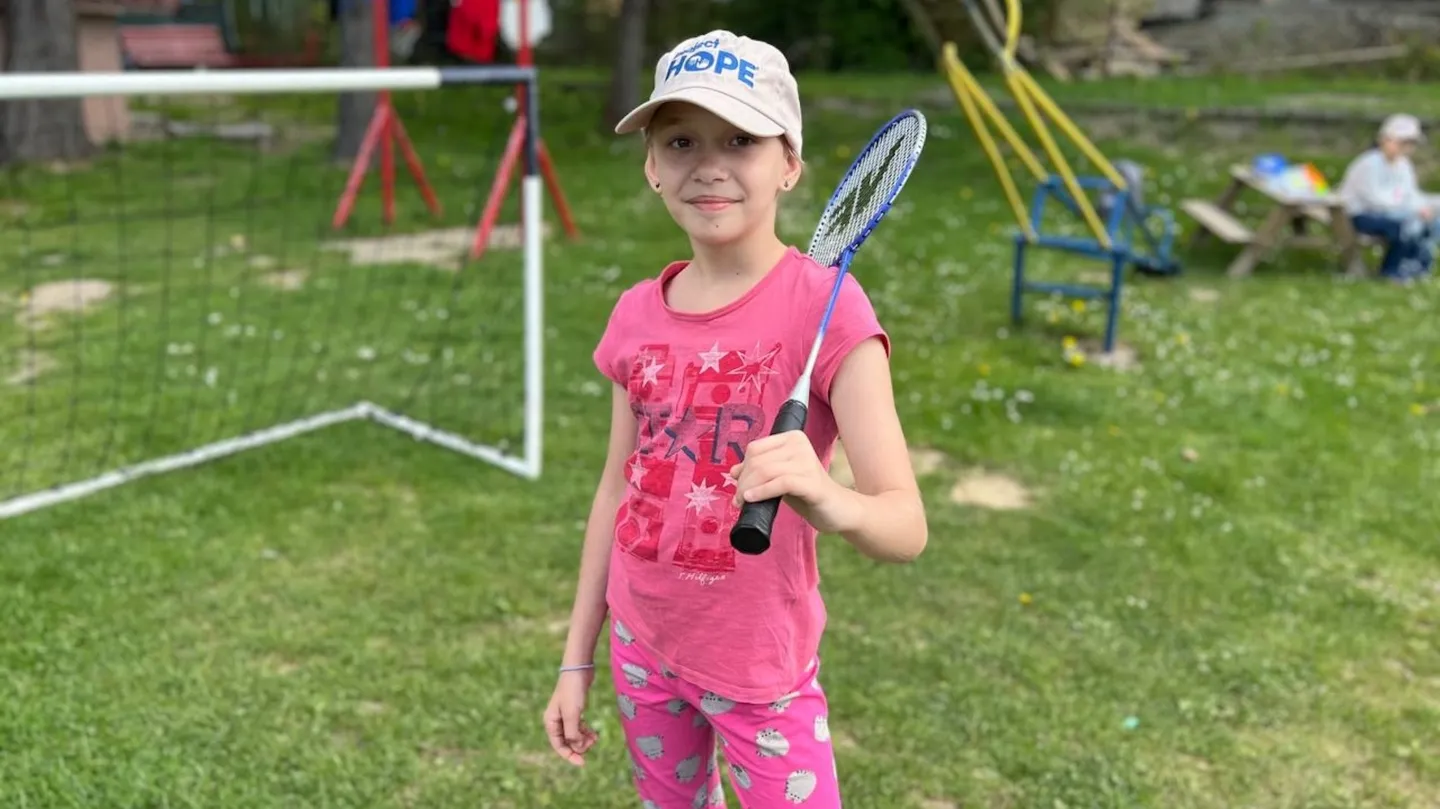
During a summer camp, children took part in swimming, badminton, soccer, basketball, and other activities to support their well-being through movement and play. Over the course of the camp, children became more open and connected, forming relationships and supporting one another.
“We should not think about mental health as something that happens only through conversation,” Stoian says. “The body is also part of how people experience and recover from stress. For children, who may not always have the language to explain what they are feeling, movement and play can provide another pathway for expression, regulation, and connection… These seemingly simple experiences can become important building blocks for resilience and psychosocial well-being.”
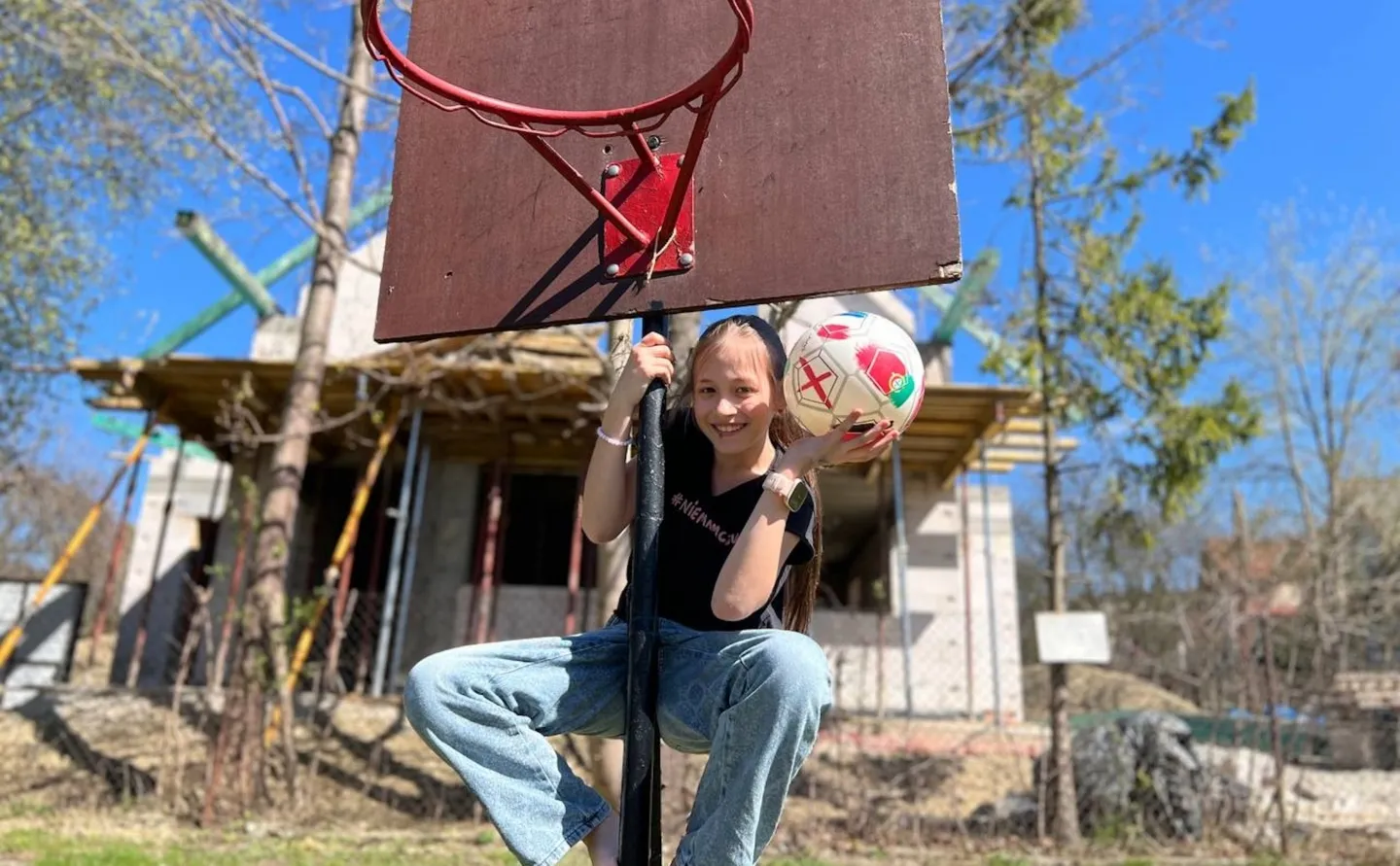
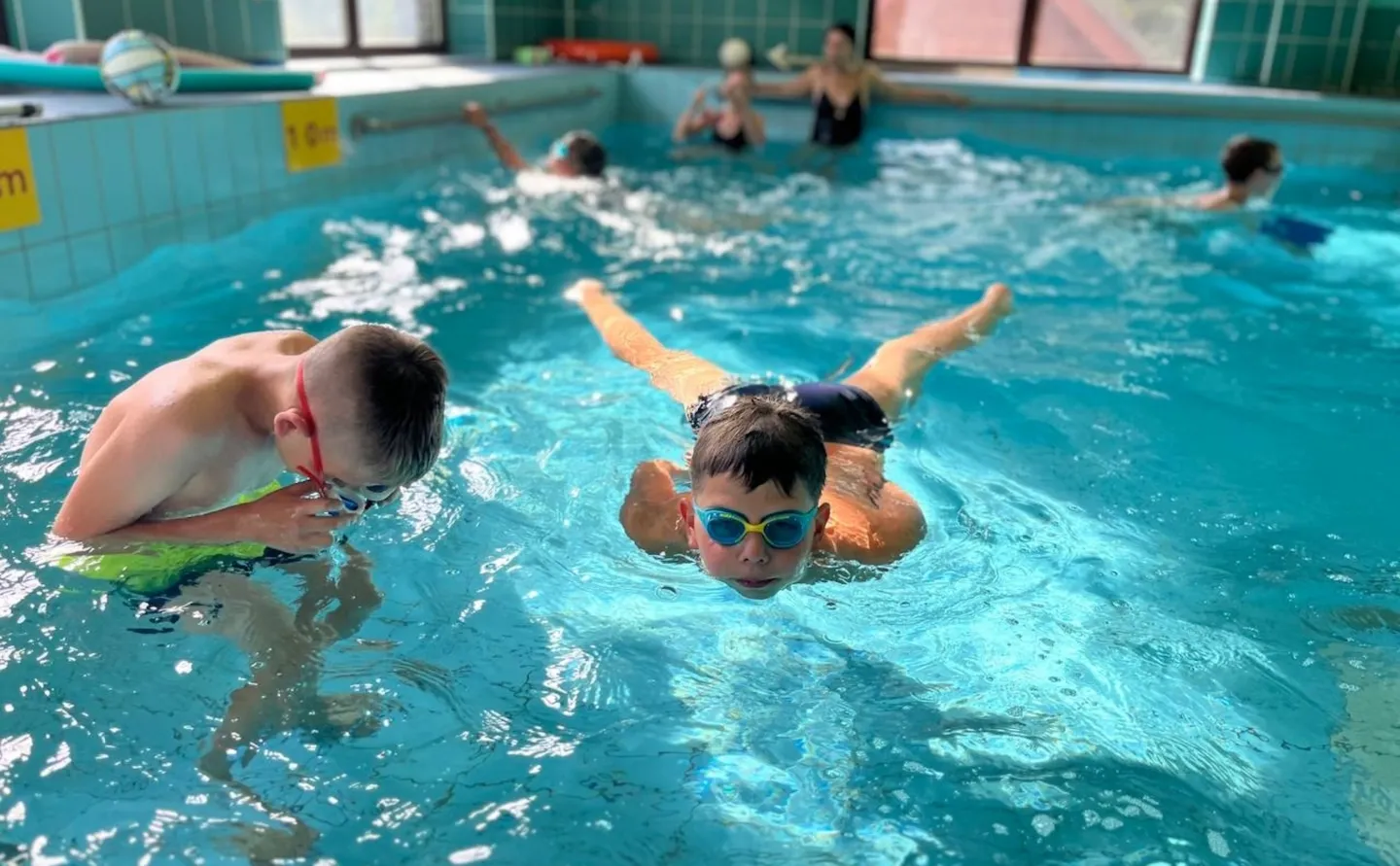
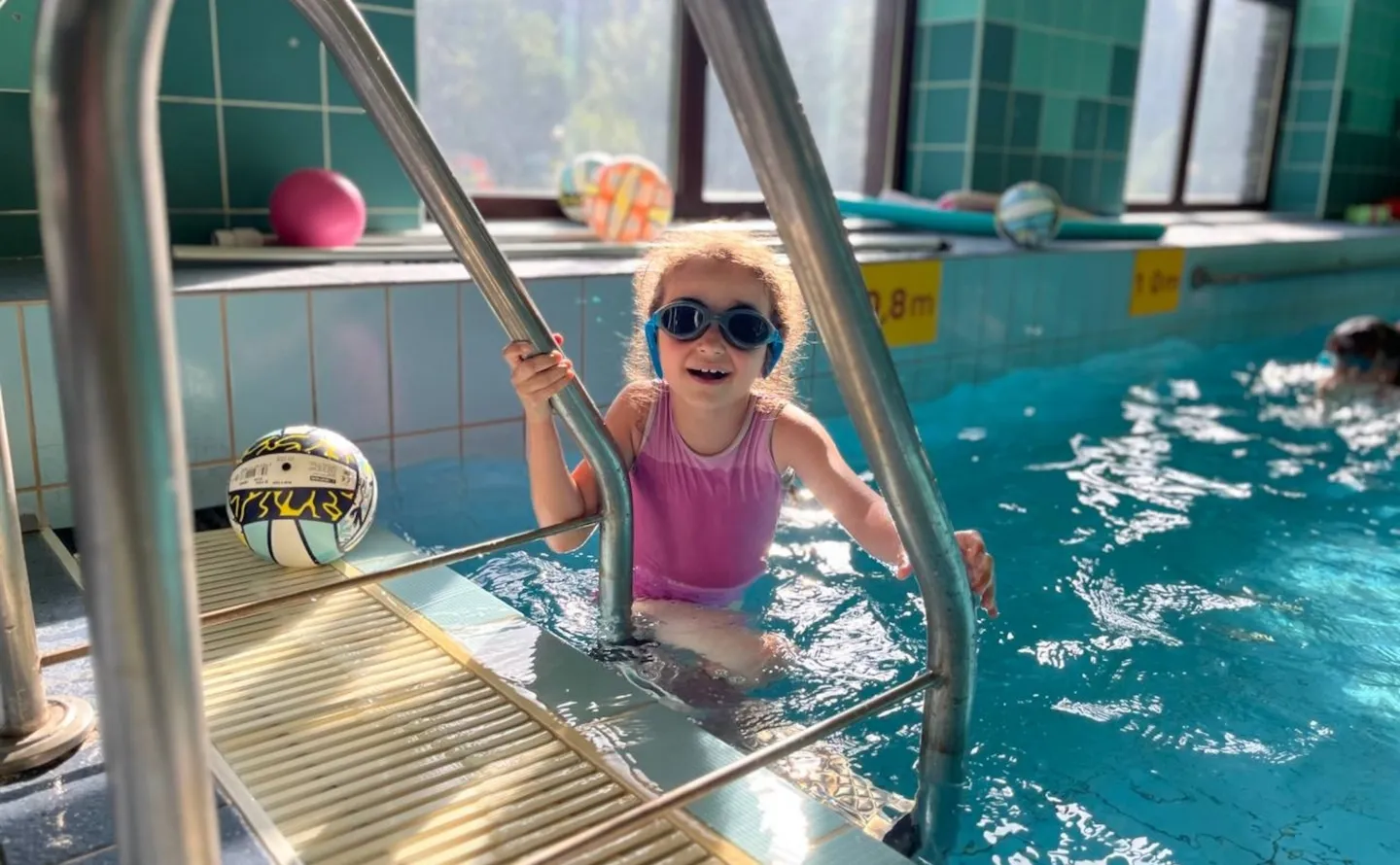
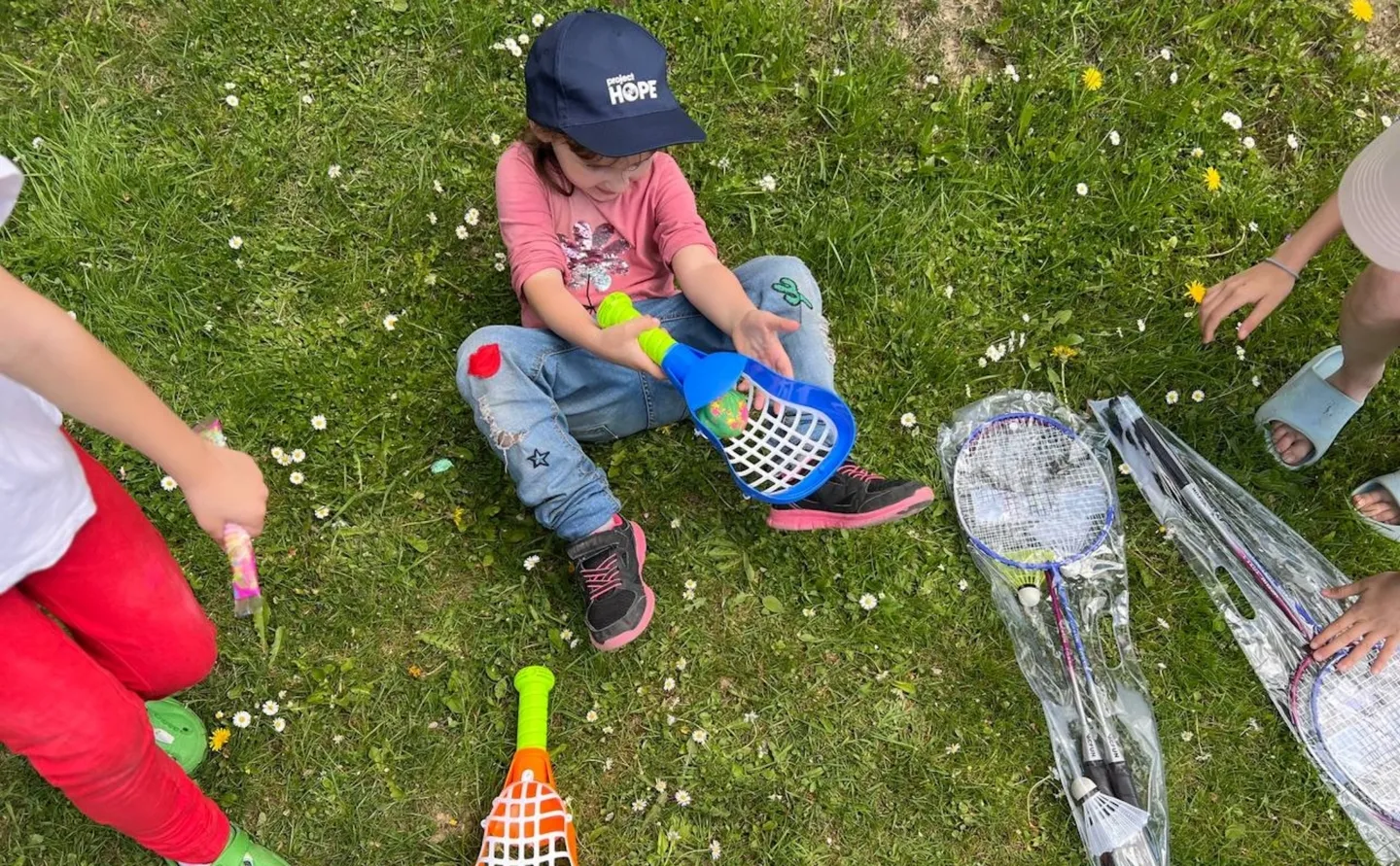
Project HOPE runs a summer camp for Ukrainian children in Poland, where children engage in a range of recreational activities to support their well-being. “Structured movement and play can offer predictability, positive social experiences and opportunities for self-expression at a time when many other aspects of life may feel outside of their control,” shares Marta Stoain, a MHPSS specialist for Project HOPE. Photo by Project HOPE staff, 2025.
Swimming, badminton, soccer, basketball, and other activities are helping Ukrainian refugee children in Poland strengthen their well-being through movement and play. “We should not think about mental health as something that happens only through conversation,” Stoian says. “The body is also part of how people experience and recover from stress.”