The Global Health Care Worker Shortage: 9 Numbers to Note
The world urgently needs more health care workers. Here are nine numbers that tell the story of the crisis and what will happen if timely action isn’t taken to close the gap in the years ahead.

A new baby in Sierra Leone. A homebound woman in Ukraine. A malnourished child in Venezuela. Without the right care at the right time, each of these lives has a high chance of ending before it should.
Health care is a fundamental human right — but without health workers, there can’t be health services. And the world has been grappling with a serious shortage of health care workers.
While the gap is already felt deeply in conflict and crisis settings, it is a threat to every country on the planet: Without more health workers, millions of people will go without the care they need to survive. That’s why training and equipping them is at the heart of our work at Project HOPE.
Here are nine numbers that help to explain the magnitude of the shortage and what’s projected for the years ahead.
11 million
The number of health care workers the world will be short by 2030.
The world needs more health workers to meet the demands of the global population without intervention, we’ll be short 11 million by 2030, mostly in lower-middle income countries. Over half the global shortage will be concentrated in Northern and sub-Saharan Africa.
Several key factors contribute to the shortages, including a growing aging population, an aging health workforce, rapid increases in chronic diseases, and the limited capacity of health education programs.
4.5 billion
The number of people living without critical health services.
Nearly half the world’s population lacks access to essential health services, which is largely a result of the shortage and the uneven distribution of health workers around the world.
The lack of access to health care doesn’t just shorten lives — it destabilizes communities and strains already fragile health systems. When people cannot reach routine or preventive care, diseases spread more easily, chronic conditions go untreated, and mental health needs often remain unaddressed.
621
The number of people for every one health worker in low-income countries.
High-income countries average roughly one health worker for every 64 people, while in low-income countries there is only one for every 621 people. This imbalance reflects a global health workforce that is not only insufficient in size, but unequal in distribution.
Shortages are concentrated in the regions where health needs are greatest. Sub-Saharan Africa carries nearly a quarter of the world’s disease burden but has only about 3% of the global health workforce. Meanwhile, high-income countries — home to a much smaller share of the world’s population — employ a disproportionate number of doctors, nurses, and midwives.

14,000
The number of attacks on health facilities and personnel since 2020.
Over the past six years, more than 14,000 attacks have occurred on health care facilities, transport, and personnel, with more than 3,600 recorded in 2024 alone.
These attacks destabilize entire health systems. Facilities are forced to close, supply chains are disrupted, and communities lose access to essential care — sometimes overnight. For health workers, the consequences are deeply personal: they face injury, trauma, and the constant risk of being targeted simply for doing their jobs. Many are forced to flee or leave the profession altogether, accelerating workforce shortages in places that can least afford it.
20%
The percentage of health workers in the United States who left their jobs during the pandemic.
COVID-19 had a profound impact on the lives and health of health care workers around the world. In the U.S., 1 in 5 health workers quit their jobs during the pandemic. Those that remain are stretched to their limits — as many as 4 in 5 health workers say staffing shortages have impacted their ability to do their jobs, and around half or more report experiencing mental health impacts from the crisis.
In the shadow of COVID-19, Project HOPE has provided a lifeline of hope for tens of thousands of health workers around the world, reaching more than 50,000 health workers across five continents with mental health and resilience trainings. The training was translated into multiple languages with the long-term goal of providing training during other global health emergencies, natural disasters, and humanitarian crises, when support is needed most.
1 million
The number of nurses over age 50 in the United States.
The growing need for health workers is also felt in the U.S. In fact, it’s predicted that upper-middle-income countries will experience the highest growth in the demand for health workers, which is why it’s especially problematic that one-third of nurses in the U.S. will retire by 2030. Before COVID-19, there were already 1.2 million nursing vacancies to fill, and the pandemic has only exacerbated the shortage.
It should be hopeful that nursing is one of the fastest-growing occupations in the country, but the nursing-education system hasn’t been able to keep up with swelling demand; in 2024, U.S. nursing schools had to turn away over 80,000 qualified applicants due to insufficient resources.
83
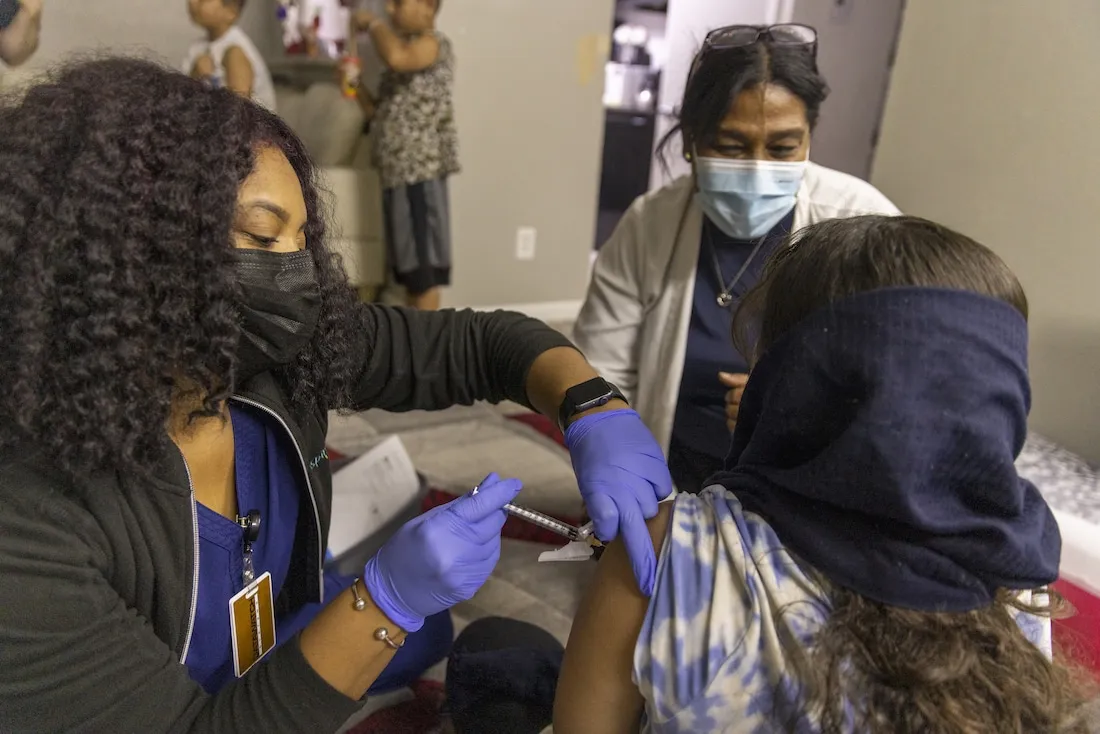
The number of countries that fail to meet the most basic standard of health care workers.
The accepted universal standard is 23 skilled health professionals per 10,000 people. But only a little over half of the world’s countries meets the threshold. Countries across sub-Saharan Africa, Southeast Asia, South Asia, and some in Oceania have the greatest shortfalls. Most preventable and treatable deaths take place in these countries, where health care is hard to access and people often go their entire life without ever seeing a doctor or nurse.
The global shortage of health workers is one reason Project HOPE has worked for more than 60 years to train and equip frontline doctors, nurses, and other medical personnel around the world. In 2024, Project HOPE trained more than 33,000 health workers worldwide.
2
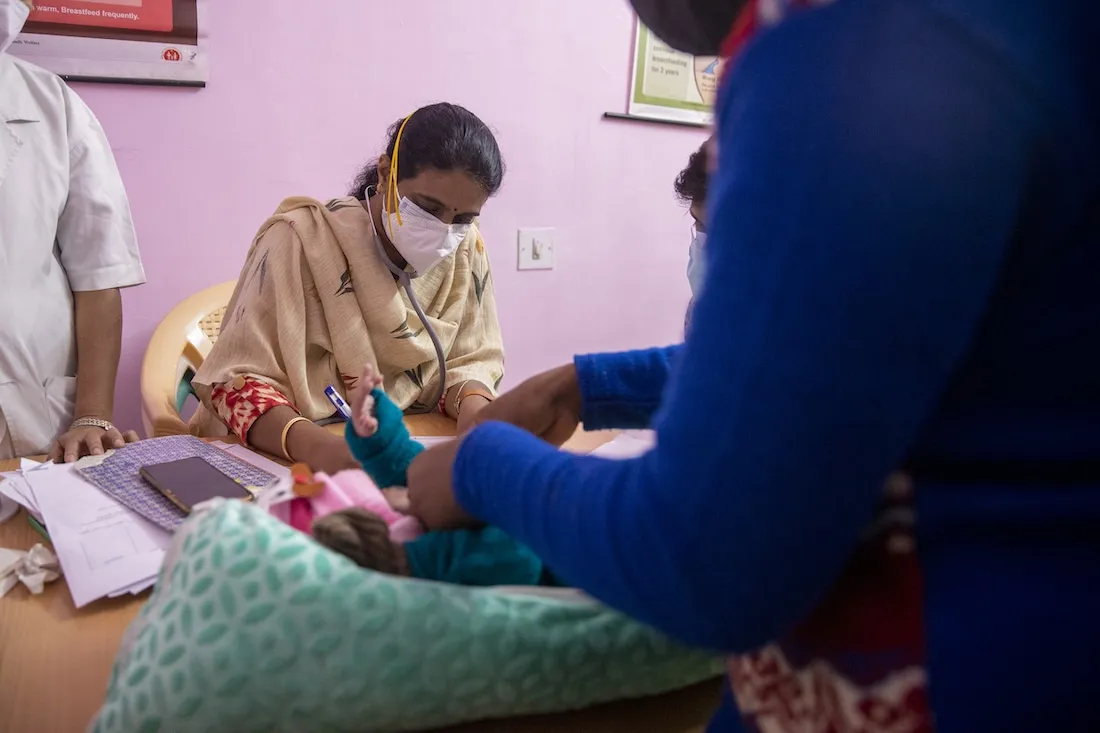
The number of doctors for every 10,000 people in sub-Saharan Africa.
The shortage of nurses and midwives in the region is equally troubling: only 10 for every 10,000 people. Far below the universal standard, the shortfall of health workers in sub-Saharan Africa leaves millions without access to basic services, maternal care, and treatment for communicable diseases, the region’s leading cause of death.
Project HOPE is focused on training health workers in the region, building their capacity to address the most pressing health challenges in Ethiopia, Namibia, Nigeria, Malawi, and Sierra Leone.
40%
The percentage of doctors in the U.S. that are over 55 and could retire in the next decade.
More than one-third of doctors could retire in the next decade — and the continuing issue of health worker burnout could lead them to work less or retire early.
The Association of American Medical Colleges predicts a shortage of anywhere from 13,500 to 86,000 physicians by 2036, underscoring the urgency to enroll and train more aspiring doctors before it’s too late.
This article has been updated from a previous iteration published on April 6, 2022 with updated numbers. We have also updated the article to 9 Numbers to Note where it was previously published under 10 Numbers to Note.

Donate
Please give now to deliver urgent relief to people facing disasters and health crises — and make a lasting impact by rebuilding clinics, supporting health workers, providing mental health care, and more.

Join
Follow us on social media, share photos and videos of our work with your family and friends, and join our community of global health champions.

Fundraise
Whether you’re looking to host an in-person event, create your own fundraiser for your birthday, do a charity stream, or run a race, join our community of fundraisers!