Conflict in Lebanon: How to Help
Project HOPE is responding in Lebanon where airstrikes have killed civilians and forced more than 1.2 million people to flee their homes. Learn more about how you can help.
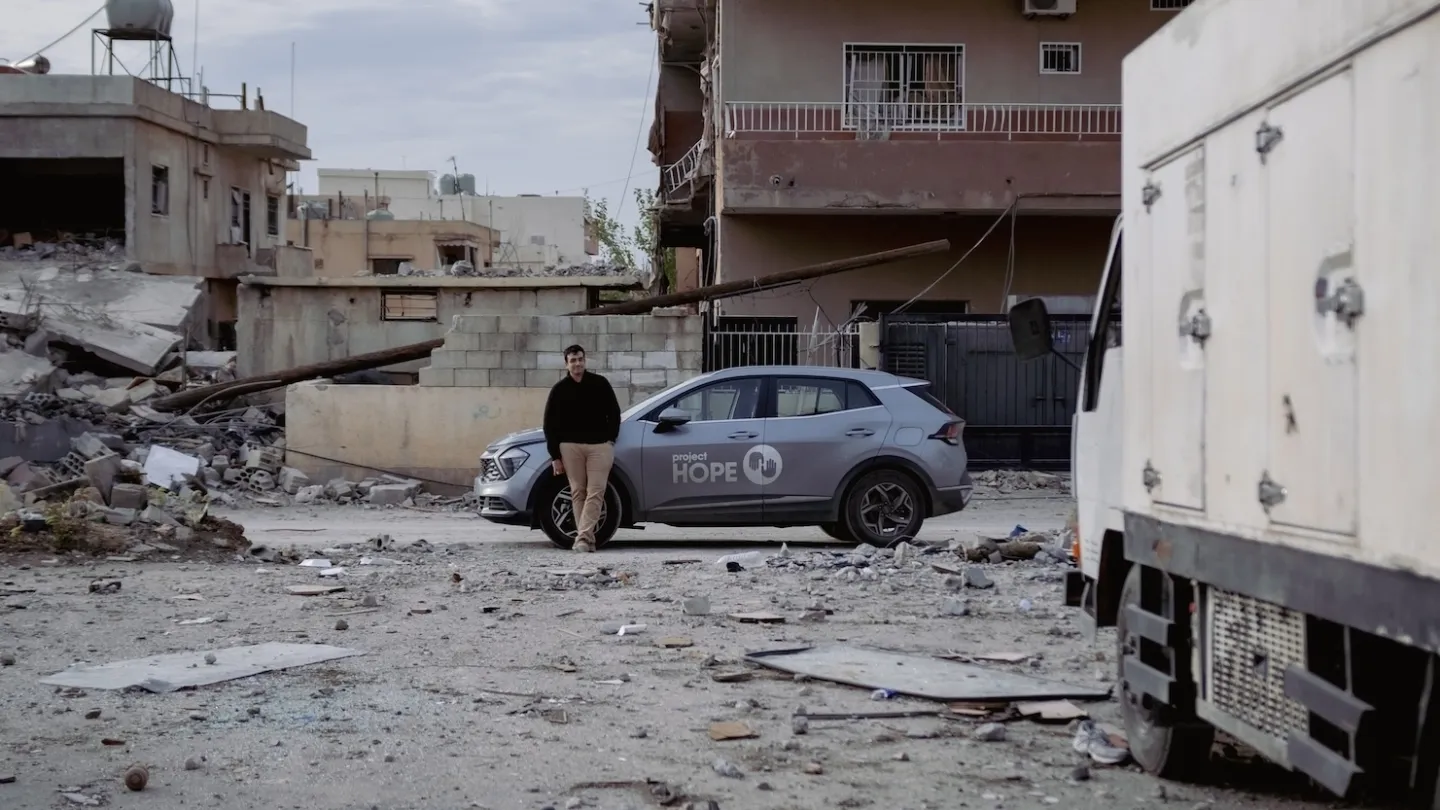
Project HOPE is responding to the impacts of the escalating conflict in Lebanon and continuing to assess the greatest health and humanitarian needs throughout the Middle East. In Lebanon, airstrikes have killed hundreds of civilians and displaced more than 1.2 million people — over 20% of the country.
After being forced to flee their homes, people require immediate assistance. Health workers need medicines and medical supplies to keep caring for their communities. Across the country, families are struggling with the most basic questions: how to keep their children safe, how to find medicine for loved ones, and how to survive the night.
Project HOPE’s team is operating mobile medical units and working around the clock to help those most affected by this crisis.
>>Read the latest situation report
What is happening in Lebanon | Project HOPE’s response
What are the greatest needs? | Project HOPE’s history in Lebanon
>>Learn about how Project HOPE is monitoring conflict in the Middle East

1.2 million
people displaced
Living in temporary settings during conflict is traumatizing. Right now, roughly 136,000 people are living in shelters and hundreds of thousands more are displaced and living elsewhere.

5,800+
people injured by the March 2026 conflict
According to Lebanon’s Ministry of Public Health, at least 17,000 people have been injured since October 2023, with at least 5,800 recently injured.

>5,000
people have been killed since 2023
According to Lebanon’s Ministry of Public Health, over 5,000 people have been killed since October 2023, with at least 1,700 killed in the latest escalation.
What is happening in Lebanon?
At the beginning of March 2026, Israel and Hezbollah began to exchange airstrikes again, breaking a tenuous ceasefire agreement that had been in place since November 2024. As a result of this new wave of conflict, Lebanon is experiencing a significant increase in cross-border hostilities and continuous waves of repeated mass displacement. With hundreds of explosions and evacuation warnings reported across Lebanon, more than 1.2 million people have fled their homes in search of safety.
Before this latest uptick in the conflict, tens of thousands were already internally displaced and Lebanon faced a protracted economic crisis, weakened public services, and high levels of vulnerability for both Lebanese civilians and refugees living in the country. In the first week of the crisis, there was a 2,500% week-over-week increase in displacement, which quickly exacerbated humanitarian needs.
The Lebanese government has opened 663 shelters, but most locations are overcrowded and people urgently need water, sanitation, and hygiene supplies, as well as bedding and shelter items. Outside of shelters, people are sleeping in their cars or in open areas by the sea with little protection from the elements.
Health facilities need continued support to meet the needs of host communities, newly displaced families, and the increased demand for care that health workers often see in conflict settings. Several facilities in the most affected governorates have already reported shortages of essential medicines, supplies, and generator fuel, and there have been 107 reported attacks on health care since the beginning of March, according to the World Health Organization.
In addition, conflict and displacement can create urgent mental health needs, especially for children. Young children and adolescents are reeling from the disruption of their daily routines, people are navigating intense fear, and those forced to flee their homes are living with constant uncertainty. It is imperative that the international community support civilians navigating these challenging circumstances.
What is Project HOPE’s response?
Project HOPE’s team in Lebanon has launched an emergency response in coordination with local officials and sector partners.
The team has established three mobile medical units that are now providing primary health care services to those displaced by the conflict. These mobile teams are staffed by a doctor, nurse, social worker, midwife, and a driver. While the stated capacity of these units is up to 600 patients a month, one of our mobile teams supported nearly 900 people in the first few weeks of operation, highlighting the increased demand for essential, lifesaving care. The teams are operating in North Lebanon, South Lebanon, and the Beirut/Mount Lebanon area, with plans to expand.
Project HOPE is also procuring and distributing water, sanitation, and hygiene (WASH) supplies and essential items like family hygiene kits, dignity/feminine hygiene kits, baby kits, mattresses, blankets, and pillows, already reaching over 2,700 people living in shelters and other high-displacement areas.
Our team in Lebanon continues to rapidly procure and distribute bottled water, essential medicines, medical supplies, and trauma supplies so that hospitals and primary health clinics can ensure continued services.
As this conflict and the ensuing displacement continue to evolve, Project HOPE is coordinating in real-time, and working closely with both our longstanding partners and the people we serve, to ensure that people have access to the health and humanitarian aid that saves lives, stabilizes communities, and protects those in vulnerable positions from harm.
Project HOPE is also continuing to act in coordination with partners in impacted areas to assess how and when we can best support the health and humanitarian needs of affected communities across the Middle East region, while remaining committed to the humanitarian principles of humanity, neutrality, impartiality, and independence.
What are the greatest health needs in Lebanon?
Lebanon’s health system was at its breaking point even before the latest escalation of violence, facing severe shortages of staff, medicines, and equipment.
People exposed to trauma need mental health support and psychosocial services; displaced families need stability, safety, access to basic supplies, and health care; and the local health system needs support to ensure it does not collapse. By surging medical supplies, operating mobile medical units, and working in close coordination with the Ministry of Public Health, Project HOPE is helping keep Lebanon’s health system upright amidst the compounding challenges it faces.
What is Project HOPE’s history in Lebanon?
After an escalation of conflict in September 2024, Project HOPE responded to urgent health and humanitarian needs facing those made most vulnerable during conflict and displacement. The Project HOPE team operated a mobile medical unit, provided surge nursing support to primary health clinics, and distributed hygiene kits, bedding, and winterization supplies to displaced families living at shelters.
After the 2024 ceasefire, Project HOPE continued to strengthen the local health system by providing operational support and supplies for the re-opening of an Intensive Care Unit, running a community outreach program, supporting primary health facilities, and training mental health care providers.
In 2020, immediately following the Port of Beirut explosion, Project HOPE launched a response to provide trauma care and psychosocial support through our local partner, Rene Moawad Foundation (RMF).
This article was last updated on April 8, 2026.