From Ukraine to Nepal: Responding When Disaster Strikes
When I arrived in Nepal to support Project HOPE’s response to the devastating floods and landslides, I came prepared for the realities of humanitarian work: long days, difficult field conditions, constant coordination, and unpredictability. But I also came as a Ukrainian, as someone who knows what it means when an emergency suddenly changes people’s lives, when familiar places become unsafe, and when communities must adapt to a reality they never chose.
Every emergency is different, and every person experiences loss and uncertainty differently. But there are some things we can recognize in one another.
One of the moments that affected me most happened while we were speaking with local healthcare workers. An elderly woman came into the room in tears. She was not looking for medical care or even for words of comfort. She needed someone to share her pain.
The local health assistant and nurse became exactly those people. In a small community where everyone knows one another, they were not simply healthcare providers. They were part of her community, people who knew her life and understood what she had lost.
The woman spoke through tears. I could not understand her language, but I understood the grief of loss. Even before my colleagues translated her words, I knew what she was speaking about.
Later, they explained that the woman had gone up the hill to graze her goat. While she was there, a massive wave swept away her home — with her children and grandchildren inside. She had watched it happen.
She cried as she told her story. The health assistant cried. The nurse cried. I will never forget that room. For those few moments, her grief seemed to be shared among everyone there, becoming a small part of each of us.
Responding as a Ukrainian
People asked me what it was like to respond to an emergency in Nepal as a Ukrainian. It is difficult to separate the two experiences. For Ukrainians, terms like “emergency,” “displacement,” “damaged infrastructure,” and “humanitarian needs” are not abstract professional terminology. They are part of our own reality.
Coming from Ukraine did not mean that I fully understood what people in Nepal were experiencing. But I recognized something familiar: the way people adapt quickly, communities organize themselves, and everyday life continues even when circumstances have changed completely. Perhaps because of that, I felt an especially strong responsibility to be useful.
I also found myself thinking about how extraordinary humanitarian solidarity can be. Ukraine continues to need enormous international support. At the same time, Ukrainian humanitarian professionals have experience and knowledge that can be useful far beyond our own borders. I was proud to bring some of that experience with me to Nepal.
Responding Together
I was prepared for the long days, but I was not prepared for how deeply impressed I would be by the response around me. From the first days, I was struck by the speed and coordination of local authorities, government institutions, healthcare workers, and ordinary people responding to the disaster. Everywhere I looked, people were finding ways to help.
Our team traveled to flood-affected communities, met with local health workers and authorities, visited temporary shelters and health facilities, and worked alongside local partners to understand what people needed most.
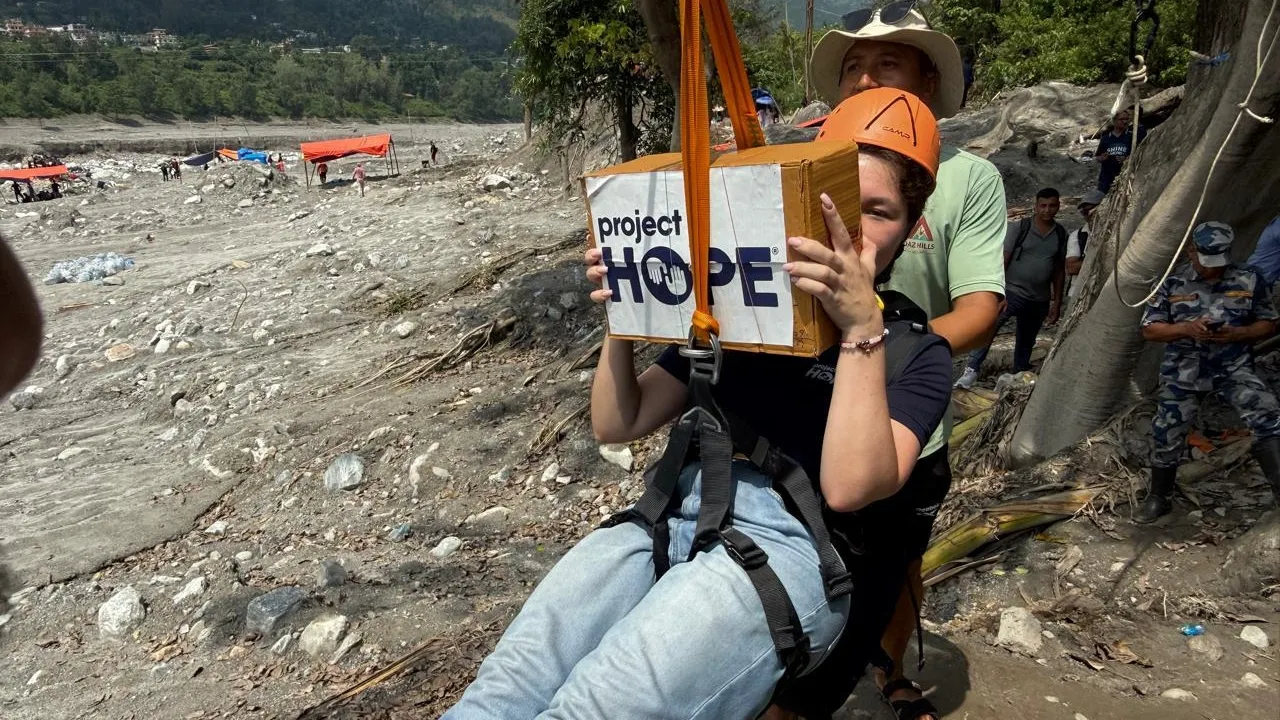
One of the experiences I will remember most was traveling to communities affected by damaged infrastructure and limited access. At one point, reaching the other side of the Trishuli River became part of our field mission. Crossing the river was not simply an unusual journey or a powerful image from the response. It represented the challenge of reaching people when the usual roads and connections are no longer available.
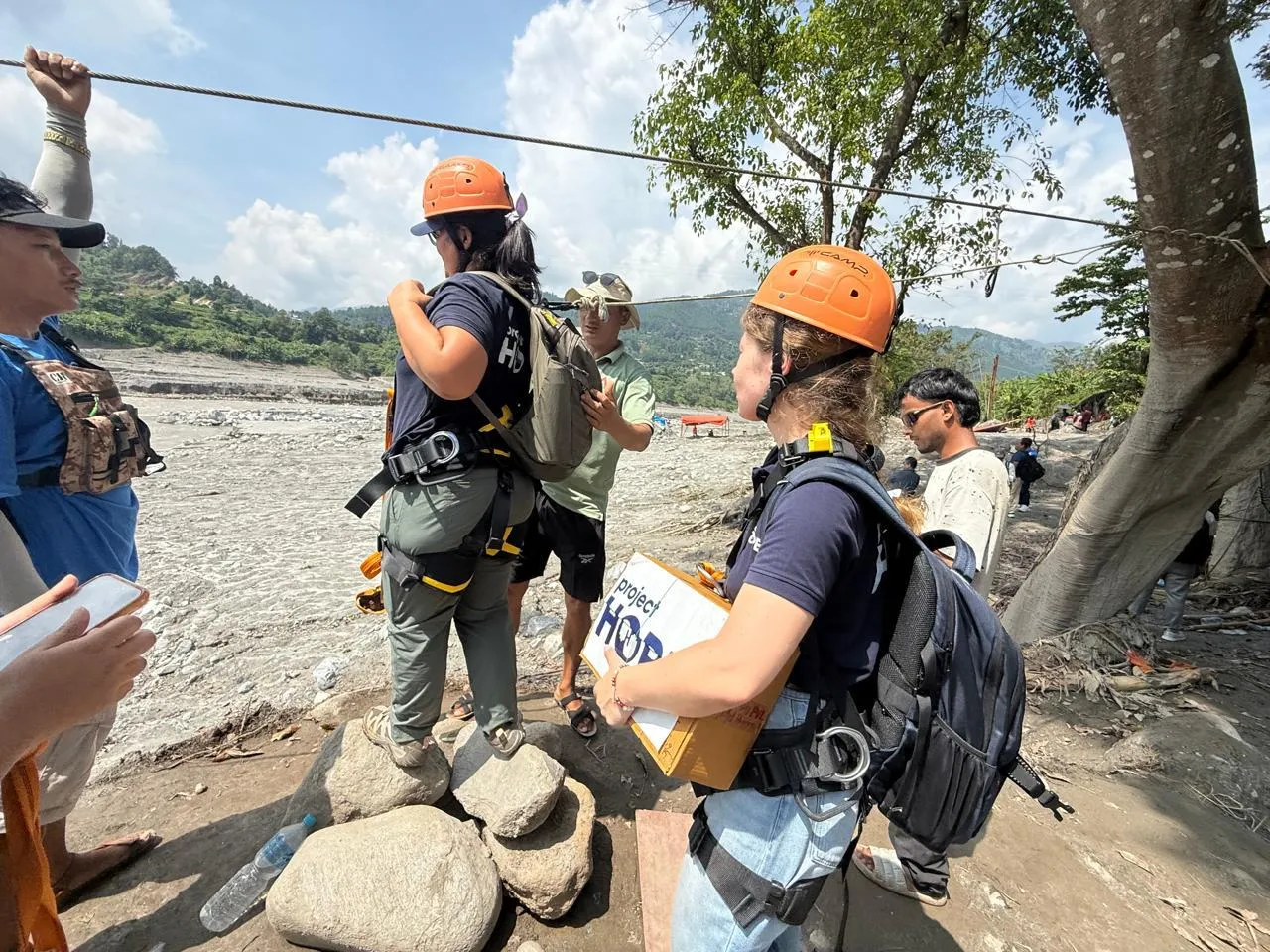
I remember seeing volunteers who looked as if they had come straight from their offices — still wearing formal clothes — standing alongside photographers with cameras hanging from their shoulders. Together, they were pulling ropes, helping people cross to the other side of the river almost by hand.
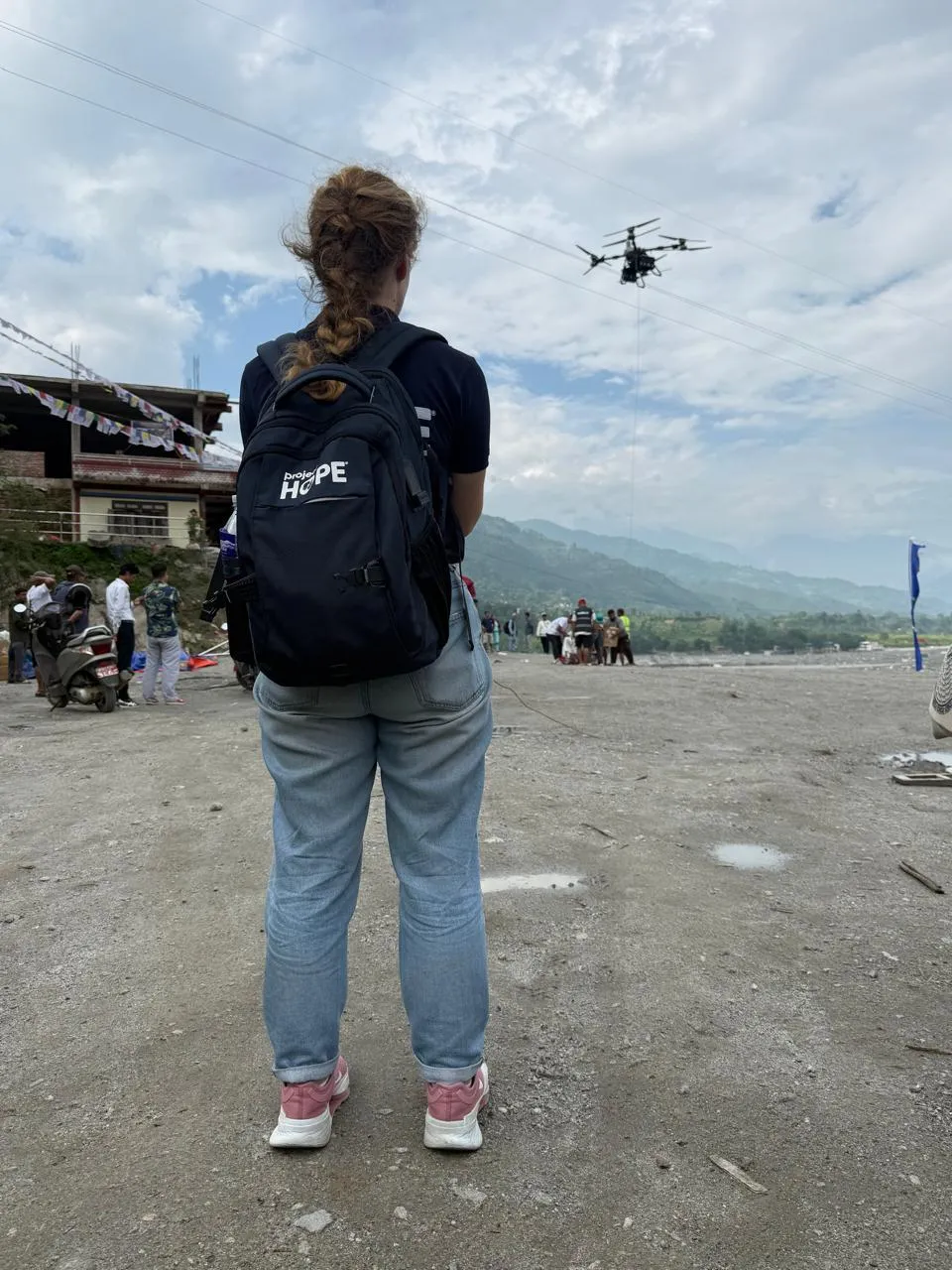
I met healthcare workers who had been working for more than two weeks without rotation. I saw exhausted government and ministry staff who had been working around the clock since the disaster began. And everywhere, I saw communities organizing, responding, and supporting one another.
Our team visited health facilities and spoke with healthcare workers who continued providing services despite incredibly difficult circumstances. Sometimes their needs were very practical — medicines, medical equipment or support to restore health services. But behind every list were people, families, and communities trying to continue their lives after disaster had changed them completely.
What impressed me most was the strength of local systems and, above all, local people. It became very clear to me that effective humanitarian assistance cannot simply be brought into a community from the outside. The knowledge, relationships, and trust are already there — with local healthcare workers, community health workers, volunteers, authorities, and community members themselves.
For me, this was an important reminder: humanitarian response is not about arriving with all the answers.
Sometimes our most important role is to listen, understand what is already working, and find the right way to strengthen it.
What Nepal Taught Me
This deployment also made me look at Project HOPE differently. When you work for an organization every day, it is easy to see it through the lens of projects, processes, meetings, and plans. In Nepal, I had an opportunity to see it from another perspective.
I saw an organization that, in a difficult and rapidly changing situation, kept looking for ways to help. When one route was not possible, we looked for another. When we identified a need, we asked what we could realistically do about it. We worked with local partners, healthcare workers, and authorities to find practical solutions.
This deployment reminded me that emergency responses happen on several levels at once. There are the visible parts: medicines delivered, medical camps conducted, assessments completed, roads traveled, and rivers crossed. Then there is the coordination behind them: meetings, logistics, data collection, reporting, and constant decisions about priorities.
But there is another level that is much harder to capture in a report.
It comes back to the woman who walked into that room in tears.
The health assistant and nurse could not undo what had happened to her. But they could sit beside her. They knew her community, understood what she had lived through, and could share, even for a moment, the weight of her grief.
The experience reminded me that local healthcare workers are far more than providers of medical services during an emergency. They are part of the communities they serve, and they will be there long after an emergency response team has gone home.
It also reminded me that psychosocial support does not always begin with a formal program or intervention. Sometimes it begins with someone from your own community sitting beside you when there is simply nothing that can be said to make the loss smaller.
Local healthcare workers are far more than providers of medical services during an emergency. They are part of the communities they serve, and they will be there long after an emergency response team has gone home.
I returned from Nepal with even greater respect for that kind of local leadership, and even prouder to be part of an organization that works to strengthen it. International organizations can bring resources, technical expertise, and global experience, but a response becomes truly meaningful when these are connected with the knowledge, relationships, and capacities that already exist within affected communities.
For a Ukrainian responding in Nepal, that lesson felt especially powerful. We may come from places thousands of kilometers apart, experience very different emergencies and speak different languages. But the instinct to protect our communities, care for one another, and rebuild after disaster is something we understand everywhere.
Mariia Kholostenko is a Program Specialist in Ukraine for Project HOPE