Flash Floods Devastate Nepal: How to Help
Project HOPE is responding to the devastation in Nepal, operating mobile medical units in hard-to-reach communities affected by a massive glacier avalanche and flash floods.
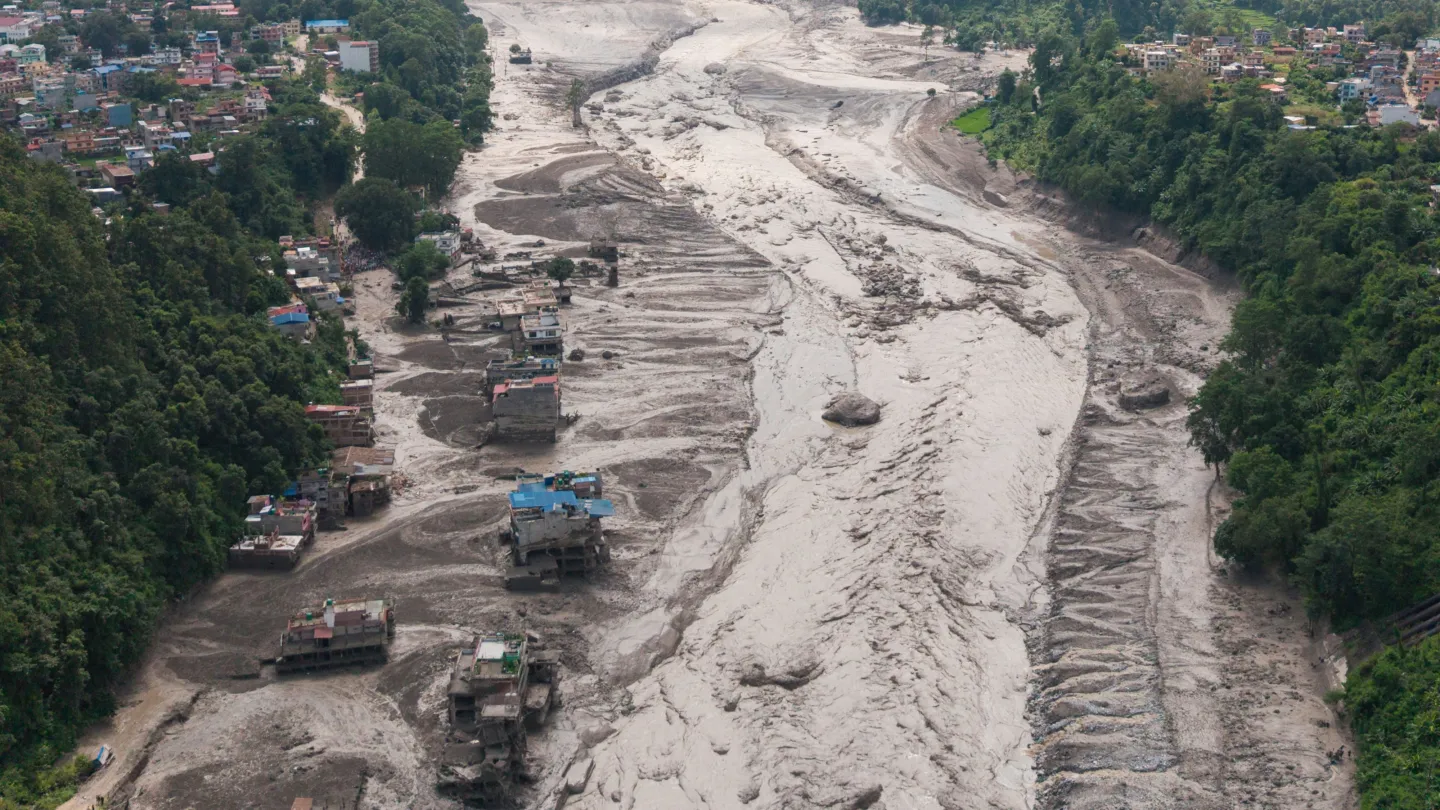
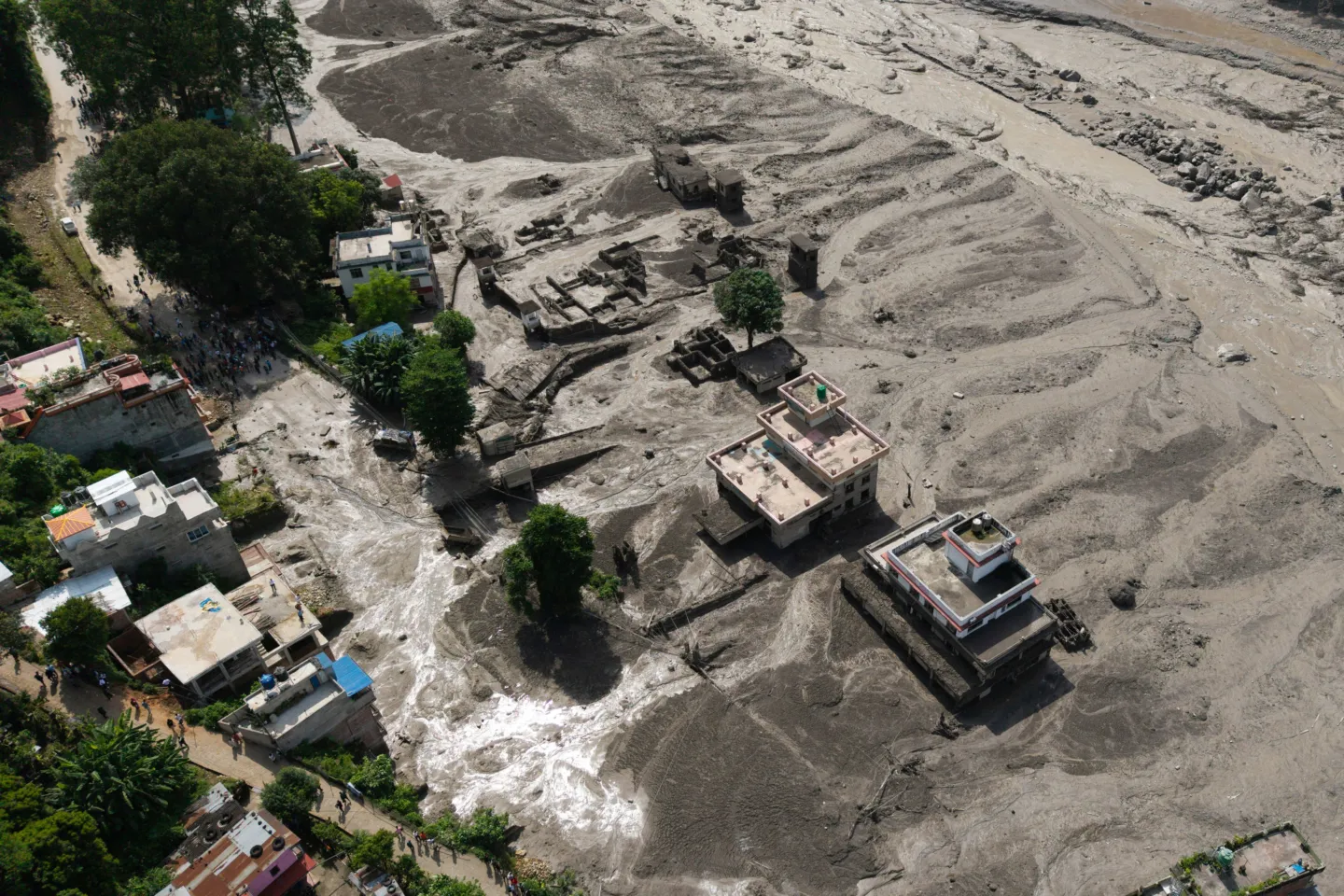
On the morning of August 26, 2026, a massive glacier avalanche near the border between Nepal and China sent tons of rock, mud, and ice into nearby rivers, triggering devastating flash floods and powerful landslides. Entire villages were wiped out in apocalyptic scenes, with major roads, bridges, electricity systems, and other critical infrastructure severely damaged.
More than 1,300 people have been killed and over 5,300 are still missing. In the coming months, affected communities — including tens of thousands of displaced families — will need support to meet nearly every basic need.
Project HOPE is responding in Nepal, operating mobile medical units and providing care in some of the hardest-to-reach communities, in coordination with our local partners, Volunteer Corps Nepal and Partnership for Sustainable Development Nepal.
- How Project HOPE is responding
- Read our latest Situation Report
- How you can help
- What are the greatest needs?
- Our history in Nepal
- Project HOPE is Responding in Nepal
What you need to know in Nepal
A fast-moving wall of rock, mud, and ice tore through communities in Nepal on August 26, after a massive glacier collapse sent debris into nearby rivers and triggered powerful flash floods and landslides. The avalanche registered a force equal to a 5.2-magnitude earthquake, wiping out entire villages, causing significant damage to critical infrastructure, and leaving a roughly 40-mile path of destruction in its wake, with debris flowing dozens of miles down rivers and reports of bodies washing ashore up to 250 miles downstream.
At least 1,300 people were killed, over 5,300 are still missing, and an estimated 90,000 people — including roughly 17,000 children — have been impacted by this disaster. Those missing include tourists from as many as 27 countries, including the United States. Many visitors were in the affected area for the Nepali festival of Janai Purnima or on pilgrimage to Tibet’s Mount Kailash, a sacred site for Hindus, Buddhists, Jains, and other religious groups.
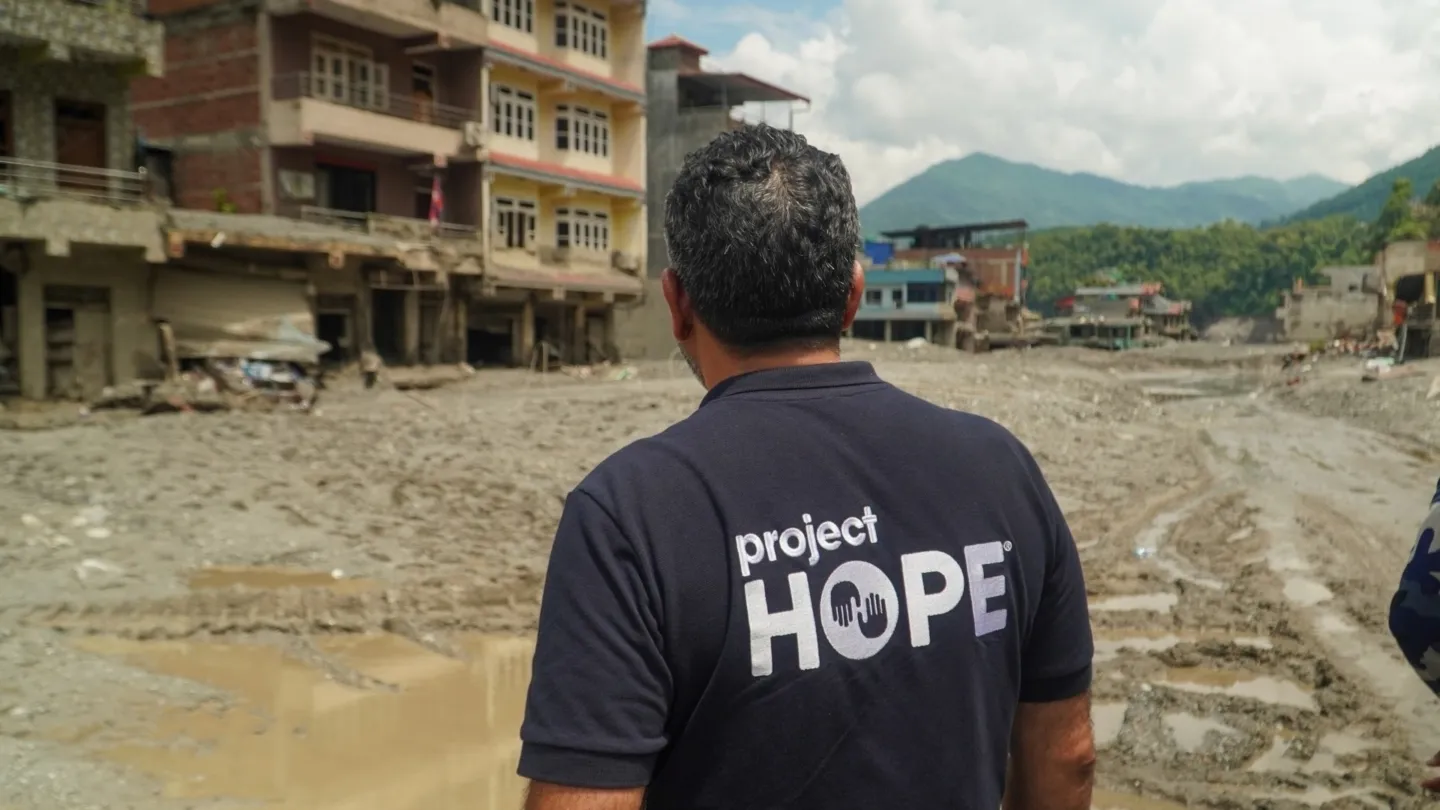
The destruction has been catastrophic and communities have been left unrecognizable, with entire stories of buildings now buried under mud. And the danger is not over. Nepal is in the middle of monsoon season, and the disaster has created new lakes and disrupted the flow of rivers, increasing the risk of additional landslides, mudslides, and flash floods. Heavy rain could further threaten communities already reeling from the disaster.
How is Project HOPE responding to the flash floods and landslides in Nepal?
Project HOPE is on the ground responding in Nepal. Our team is operating five mobile medical units to reach the most-impacted communities with essential, lifesaving healthcare. Working with our local partners, Volunteer Corps Nepal (VCN) and Partnership for Sustainable Development Nepal (PSDN), our doctors, nurses, paramedics, and mental health professionals are providing the care families need to recover.
To reach these families, Project HOPE’s team is crossing the dangerous Trishuli River and overcoming logistical difficulties in some of the toughest terrain in the world. As families find themselves reeling from catastrophic landslides and devastating flash floods, Project HOPE’s teams — and our donors, supporters, and local partners — are making sure no community is forgotten.
The Project HOPE Emergency Response Team continues to assess health and humanitarian conditions and mobilize additional response efforts. We are in close coordination with local, national, and international partners and our focus remains on keeping Nepal’s health system functional and supporting recovering families.
“The situation is still developing. Behind every number is a family and a community affected by this disaster. Right now, the priority is reaching those communities, understanding what they need and making sure assistance gets to the people who need it most.”
– Emad Al Shammari, Project HOPE Senior Director, Global Supply Chain & Security
Project HOPE has responded to multiple earthquakes and similar rapid-onset disasters in recent years, including major floods or landslides across five continents. In the past year alone, our teams have supported communities devastated by landslides and flash floods after Hurricane Melissa in Jamaica; provided critical support in Malawi and Mozambique, where cholera spread rapidly after massive flooding; and responded to earthquakes in Colombia and Venezuela.
What are the greatest needs following the flash floods in Nepal?
Families are facing an urgent need for healthcare; water, sanitation, and hygiene (WASH) services; and mental health support. An estimated 22,000 children are without access to safe water, increasing the risk of illness and adding to the already urgent need for WASH services. Many residents are struggling to access adequate shelter, clothing, food, healthcare, and medication, and the devastation has resulted in deep humanitarian needs.
The affected area is home to incredibly difficult terrain, greatly complicating response efforts in the wake of the disaster. Project HOPE has also identified a notable gap in access to services on the western and northern sides of the Trishuli River due to these access constraints. Our response team is overcoming these logistical barriers and geographic difficulties, coordinating closely with local officials, hiking when necessary, and doing whatever it takes to reach those in need.
Project HOPE has identified critical health needs and a demand for medical surge staffing support. Beyond the primary healthcare needs common in disaster responses, crowded shelters and disrupted essential services are increasing the risk of dengue fever and diarrheal diseases. There is a significant need for mosquito nets as dengue fever season begins in September and continues through November.
The mental health and psychosocial toll of this crisis is also becoming more and more apparent as the days continue. Emergencies like these that strike rapidly and with little to no warning cause intense stress and fear among survivors. Families in Nepal are coping with the loss of loved ones, homes, livelihoods, and basic necessities, while health workers and first responders face significant strain caring for their communities and trying to care for their own families amid the devastation.
With Nepal in the middle of monsoon season, the threat of additional landslides, mudslides, and flash floods could further compound the crisis. Continued rainfall and newly formed bodies of water may put already affected communities at greater risk and create additional challenges for recovery.
What is Project HOPE’s history in Nepal?
Project HOPE has extensive experience in Nepal, spanning emergency response and longer-term health programming. In 2015, Project HOPE was one of the first organizations to coordinate relief efforts following the devastating 7.8-magnitude earthquake. During that response, Project HOPE deployed medical volunteers who cared for 1,522 patients and delivered more than $15.8 million in urgently needed medicines and supplies, ultimately benefiting an estimated 230,000+ patients.
Then, in 2016 and 2017, Project HOPE remained in Nepal, working with midwives and local communities to improve maternal and child health outcomes for more than 5,000 women and children through door-to-door health visits, nutrition programs, and other services.
In 2021, as the COVID-19 pandemic brought deadly waves of the Delta variant, shortages of medicines, beds, ventilators, oxygen, personal protective equipment, and other critical supplies left health workers in Nepal underequipped to combat the virus. In response, Project HOPE trained more than 4,500 health workers and distributed more than 1.7 million pieces of PPE and medical equipment to 13 hospitals and six health centers, focusing on hard-hit Lumbini Province.
How you can help Nepal
The flash floods and landslides in Nepal have wiped out villages and impacted critical infrastructure. Entire communities have been made vulnerable by this crisis. If you want to help, here’s how you can get involved:
1. Make a lifesaving gift to support our work now and for the future.
2. Interested in an employee giving campaign for Nepal? Please contact us — we are happy to help.
3. Stay up-to-date on this story and our lifesaving work around the world by following us on Facebook, Instagram, LinkedIn, and X/Twitter, and help spread the word about our response.
Volunteering: At this time, we are not seeking volunteers to deploy to our response in Nepal. This is an ongoing response and needs may change. We encourage interested parties to submit an application with our volunteer emergency response database and we will reach out if your specialty is requested.