Colombia Earthquake: How to Help
Project HOPE is responding to humanitarian needs in the aftermath of a deadly earthquake that struck near Cali, Colombia. Learn more about our response and how you can help.
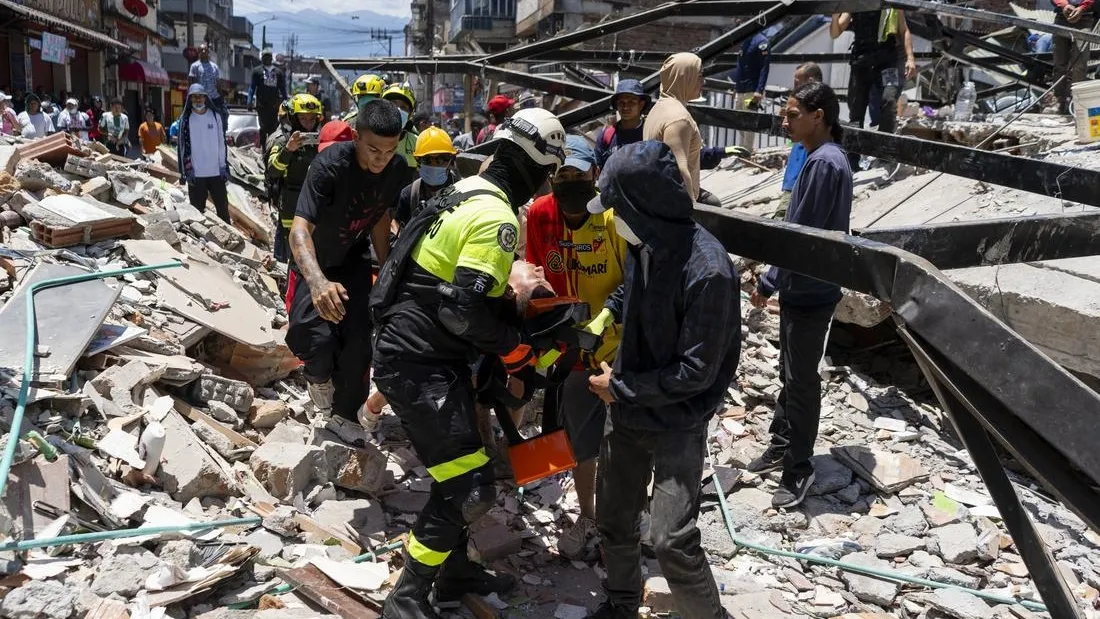
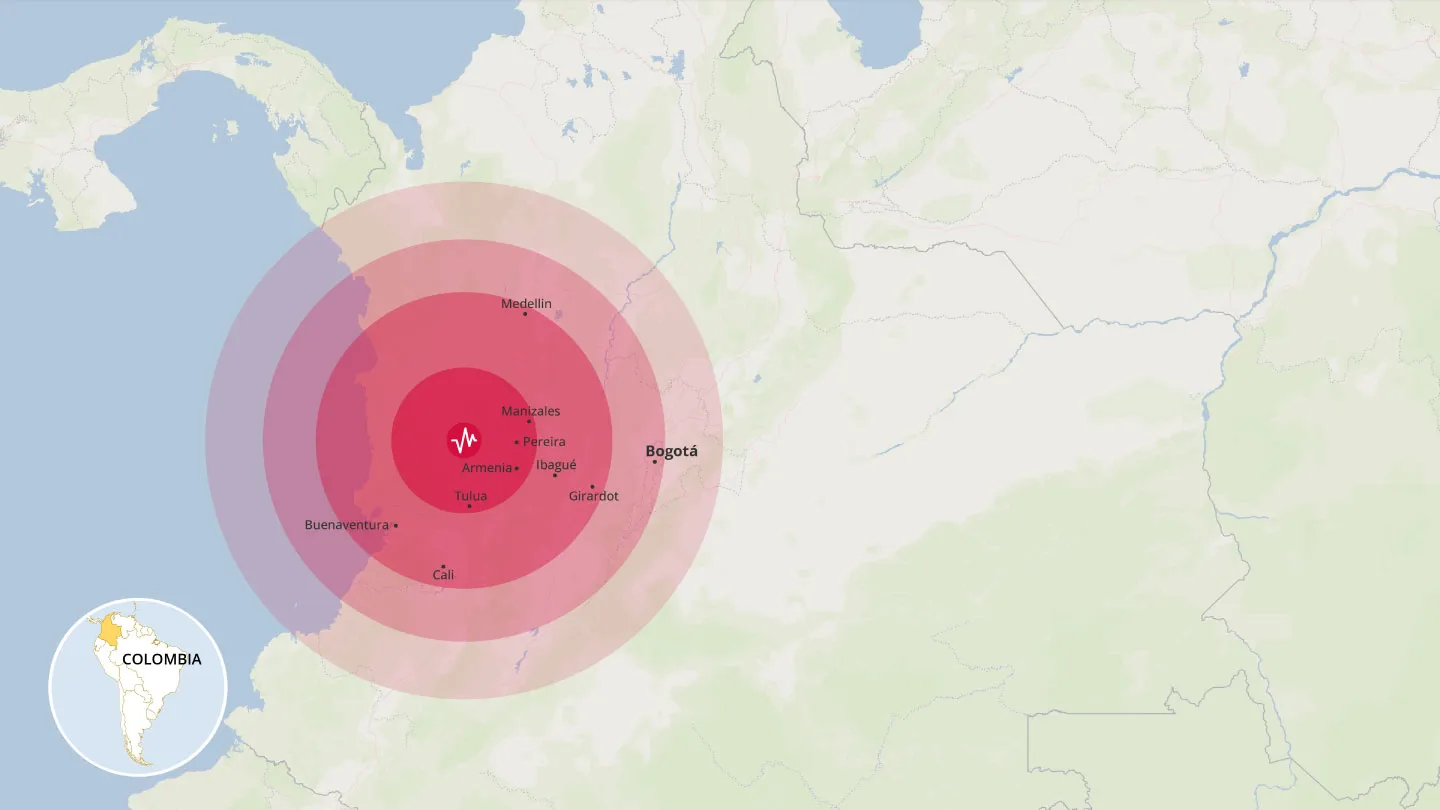
On the morning of August 10, 2026, a deadly 7.4 magnitude earthquake struck Colombia, 150 miles west of the capital city of Bogotá. This was the strongest earthquake to hit Colombia since 2016.
There were over 250 aftershocks and damage is widespread across western Colombia, with collapsed buildings and significant impact on critical infrastructure, including health centers. Hundreds of people were killed, more than 4,500 were injured, and over 242,000 homes were damaged or destroyed.
Project HOPE is responding to the greatest needs following the devastating disaster, operating mobile medical units in rural communities where health facilities collapsed. We have also equipped health workers with medicines, distributed medical supplies, and supported displaced communities and people living in shelters. With your support, we can keep helping communities access the care and resources they need as they begin to stabilize and recover. Read on to learn more about how you can help.
What you need to know in Colombia
A deadly 7.4 magnitude earthquake struck western Colombia in San José del Palmar, affecting over 120,000 families and causing damage in 448 municipalities across 15 departments. This was the strongest earthquake to strike Colombia in a decade, and it hit early in the morning as children were heading to school and people were commuting to work.
Over 300 people were killed and more than 4,500 were injured.
The destruction is widespread across western Colombia. More than 170 buildings collapsed, including health facilities, at least 206,000 homes were damaged, and at least 36,000 homes were completely destroyed. Roads, bridges, airports, and water supply systems have all been damaged, and 402 health centers and 4,431 educational institutions were impacted.
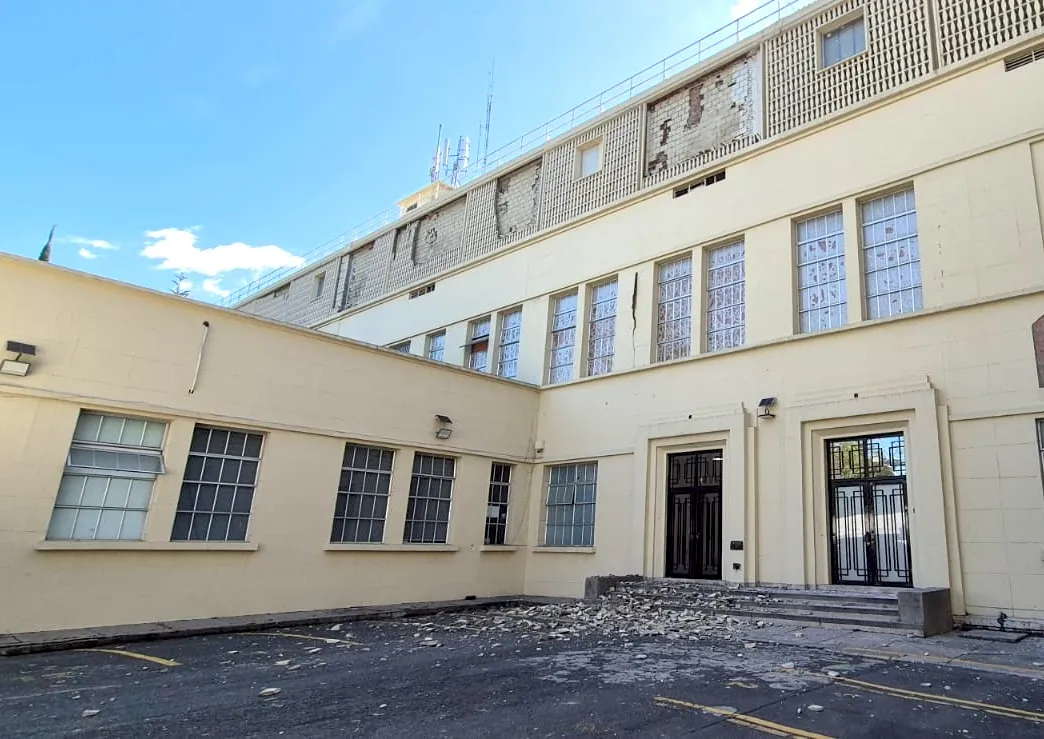
Significant damage was reported in Cali, Colombia’s third-largest city — which is 100 miles from the epicenter — with 45 buildings that partially or wholly collapsed. Across the affected region, health facilities have been overwhelmed and health workers have been providing care with limited access to essentials and supplies.
How is Project HOPE responding to the earthquake in Colombia?
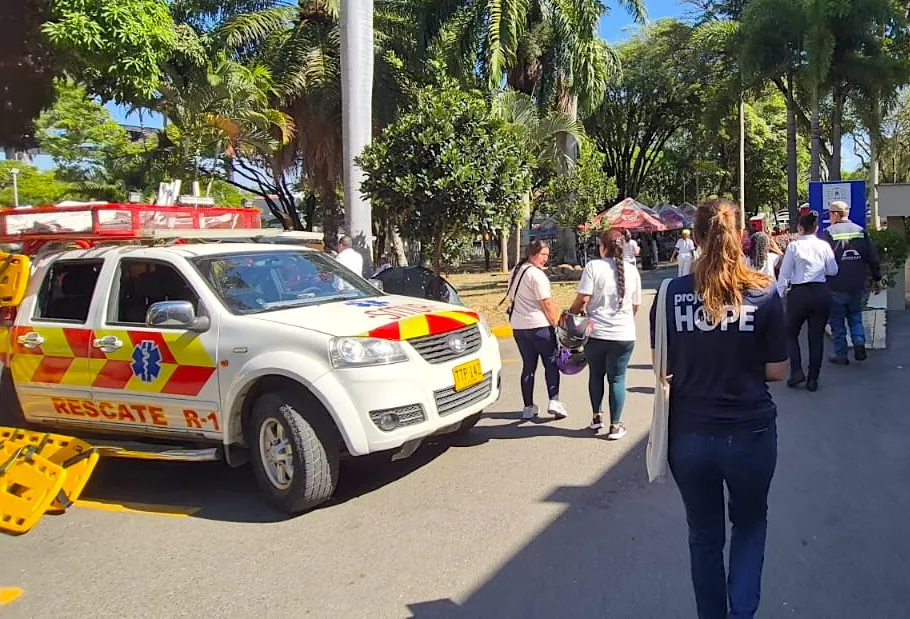
Project HOPE is responding to humanitarian needs by operating mobile medical units outside Roldanillo, in rural communities where local health facilities collapsed. Mobile medical units have also supported four local shelters in Pereira over the course of one month. These units have brought essential health services directly to earthquake-affected communities, helping ensure people can access care even where health facilities and other services have been disrupted.
In the immediate aftermath of the earthquake, Project HOPE delivered urgently needed medicines and essential supplies and distributed hygiene and sanitation items to help survivors meet basic needs. Supplies included diapers, toilet paper, sanitary pads, toothbrushes, and other essential items.
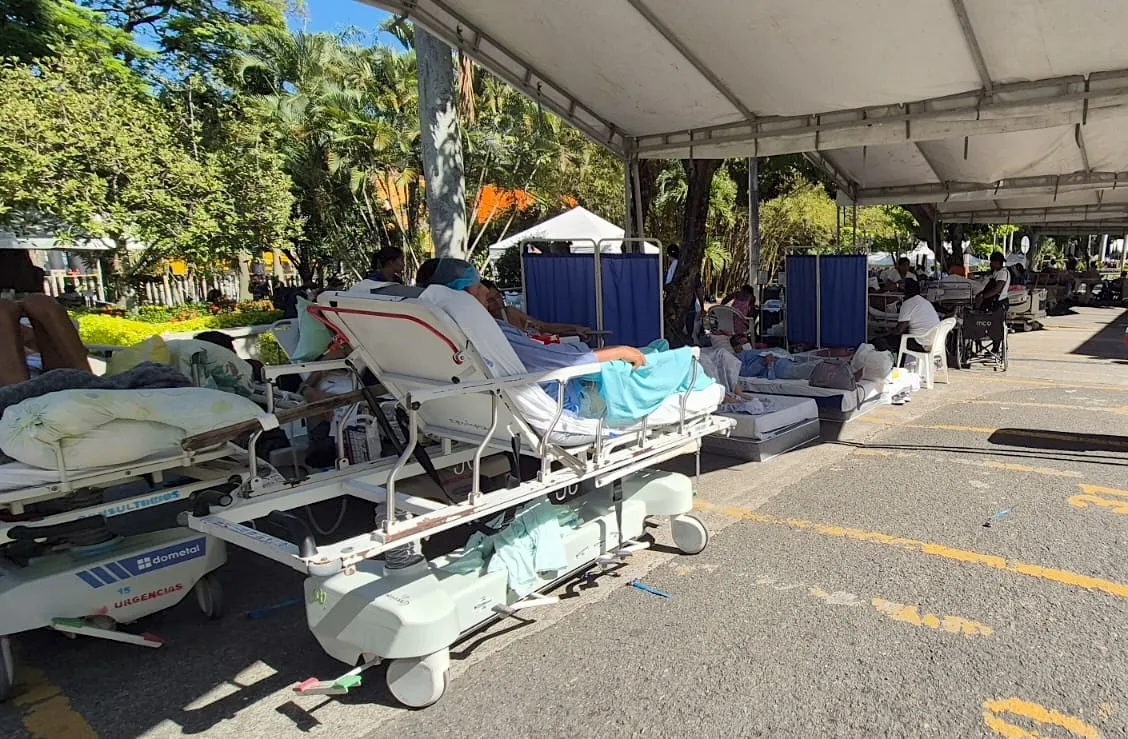
Project HOPE began assessing health facilities just hours after the earthquake struck, surveying the partially collapsed Hospital Universitario del Valle Evaristo García in Cali, where health workers had to set up tents outside to treat the injured. These assessments helped our teams identify urgent gaps and determine where medicines, medical supplies, and other support were needed most.
Our team also provided support in hard-to-reach communities, traveling via boat, navigating around landslides, and walking across heavily damaged areas to reach those most in need. In the Chocó Department, where the earthquake’s epicenter was located, our team assessed needs in communities accessible only by boat and distributed urgently needed hygiene supplies, ensuring people outside major cities were not forgotten.
As needs evolve, we will continue working alongside local health workers and communities to expand access to care, deliver essential supplies, and support displaced families as they recover.
“During the acute period of the response, the focus is saving lives and addressing acute needs, but after we need to support the health system to recover and help families who have lost everything to recover as well.”
– Pamela Londoño Salazar, Project HOPE Global Mental Health Advisor
Project HOPE has extensive experience responding to earthquakes around the globe. In any response, we aim to address both urgent and long-term needs, stabilize local health systems, and ensure families have adequate access to primary healthcare; mental health and psychosocial support (including psychological first aid); shelter; and water, sanitation, and hygiene.
What are the greatest needs following the earthquake in Colombia?
Prior to the earthquake, nearly 7 million people in Colombia already needed humanitarian support and areas of western Colombia were already experiencing displacement from violence. Widespread devastation is driving humanitarian needs higher as families face further displacement, disrupted services, loss of income, and reduced access to basic necessities. In many towns, residents cleared debris themselves with minimal supplies.
“For those displaced by this disaster, the continuity of health and mental health services is extremely important, especially during the recovery phase as folks begin to understand the lasting impacts of the earthquake.”
– Arlan Fuller, Project HOPE Director of Emergency Preparedness & Response
Health workers across the region provided care in damaged buildings and, in some cases, with limited access to medicines and clean water. Damage to health facilities and other critical infrastructure has placed additional strain on communities already facing significant humanitarian needs.
Recovery will take time. The effects of an earthquake can last long after the immediate emergency has passed. Losing loved ones, homes, livelihoods, and a sense of safety can have lasting effects on mental health and well-being, making psychological first aid and other mental health support an important part of recovery.
What is Project HOPE’s history in Colombia?
Project HOPE first began its work to strengthen healthcare in Colombia in 1995, when we helped establish a regional emergency medical system at the request of local government, health facilities, and university partners.
In 2018, Project HOPE began responding to the urgent needs of host communities, Venezuelan migrants, and refugees living along the Colombia-Venezuela border in the Norte de Santander department. Since then, we have continued to expand access to health services in Cúcuta, Villa del Rosario, and other municipalities in Norte de Santander, working in coordination with local health authorities.
Over the years, our work in Colombia has included providing primary and maternal healthcare, distributing hygiene kits, operating mental health and psychosocial support, conducting health brigades, connecting displaced families with social work and support services, repairing water and hygiene infrastructure, and supporting health workers with equipment and training.
How you can help Colombia
The earthquake in Colombia has displaced thousands of people and entire communities have been made vulnerable by this crisis. If you want to help, here’s how you can get involved:
1. Make a lifesaving gift to support our work now and for the future.
2. Interested in an employee giving campaign for Colombia? Please contact us — we are happy to help.
3. Stay up-to-date on this story and our lifesaving work around the world by following us on Facebook, Instagram, LinkedIn, and X/Twitter, and help spread the word about our response.