War Has Isolated Communities Across Ukraine. Mobile Clinics Are Reaching Them.
Svitlana Bazyk lives in Chernihiv Oblast, Ukraine, where years of war have made routine medical appointments difficult.
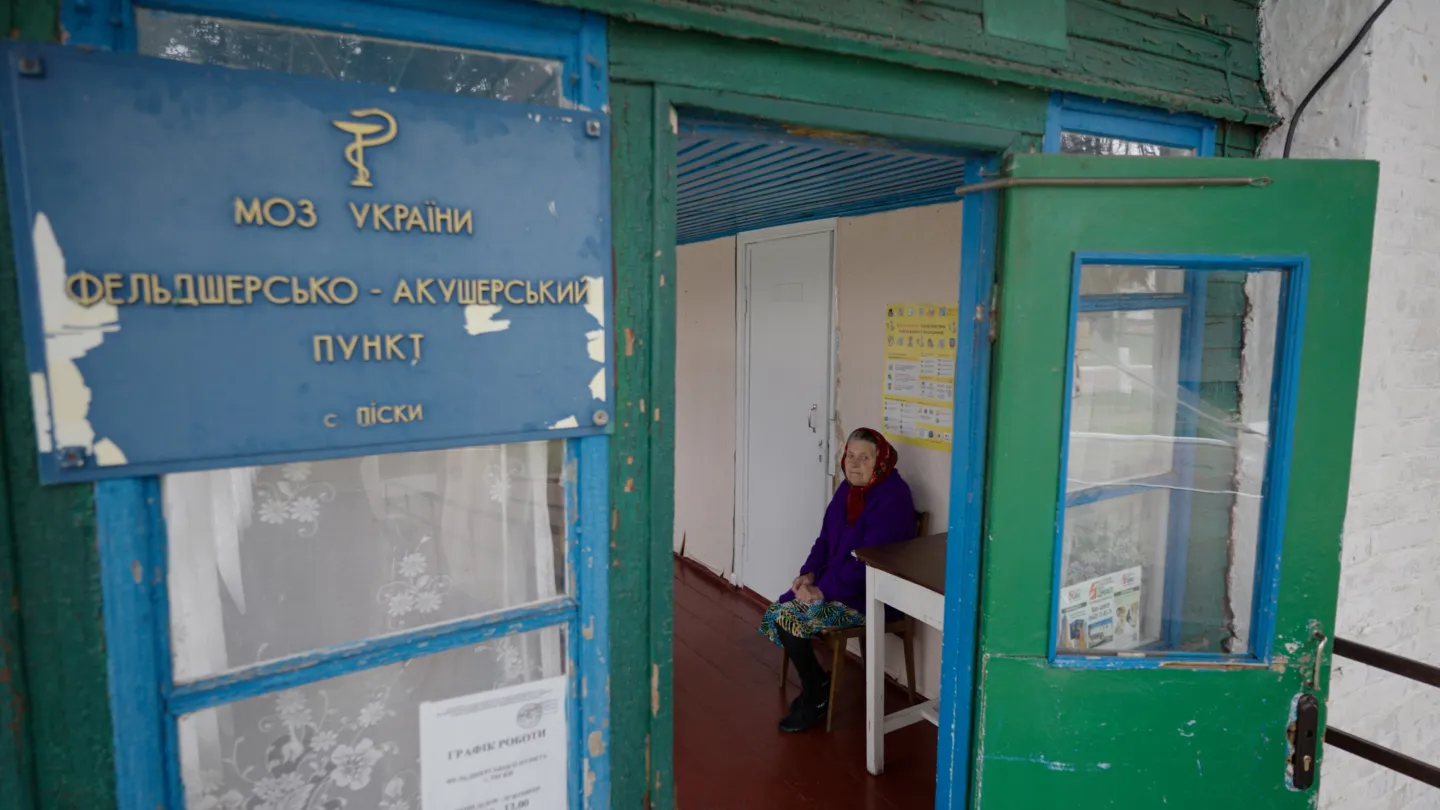
For Svitlana Bazyk, access to health care now arrives by car.
The 65-year-old lives in Chernihiv Oblast, Ukraine, where years of war have made even routine medical appointments difficult to reach. She recently visited a Project HOPE mobile clinic in her village, where she received a consultation, an electrocardiogram, and a prescription for new medication.
“Life has changed a lot since the full-scale invasion,” Svitlana says. “The stress and fear have seriously affected my health.”
She now struggles with back pain, high blood pressure, and other health complications. Before the war, she could travel to Nova Basan by bus to see her family doctor. Now, public transportation no longer runs, and hiring a car is too expensive.
“Life has changed a lot since the full-scale invasion. The stress and fear have seriously affected my health.”
Across Ukraine, more than four years of war have made health care increasingly difficult to reach, particularly for older adults, people living with chronic illnesses, and rural communities cut off by conflict and damaged infrastructure.
To help close the gaps, Project HOPE operates mobile medical units (MMUs) across eastern and southern Ukraine, bringing care directly to communities on the front lines. Staffed by doctors, nurses, social workers, psychologists, and drivers, these teams provide consultations, medications, diagnostic testing, and mental health support. To date, they have delivered more than 1.9 million medical consultations, including more than 27,000 mental health consultations, reaching more than 718,600 patients. In the first quarter of 2026 alone, MMUs reached more than 58,700 patients and delivered over 180,800 consultations.
The need for psychological support has grown significantly as communities continue to live under constant stress and uncertainty.
“People experience constant anxiety, sleep disturbances, and depression, and this affects both older adults and young people alike,” says Andrii Tkachenko, a clinical psychologist with one of Project HOPE’s mobile medical teams. “Ongoing stress, air raid alerts, and time spent in shelters impact everyone.”
“Every patient who visits our mobile medical team leaves with a sense of relief,” he adds.
For patients like Svitlana, the visits are about more than medicine. They are a lifeline.
“It is much easier to receive care here in the village than to travel,” Svitlana says. “Even if it’s just once a month, it makes a big difference.”
Hear from Svitlana and other patients in the village of Pisky in the video below: