Gaza Damage Assessment: Immediate Need for Health Investments
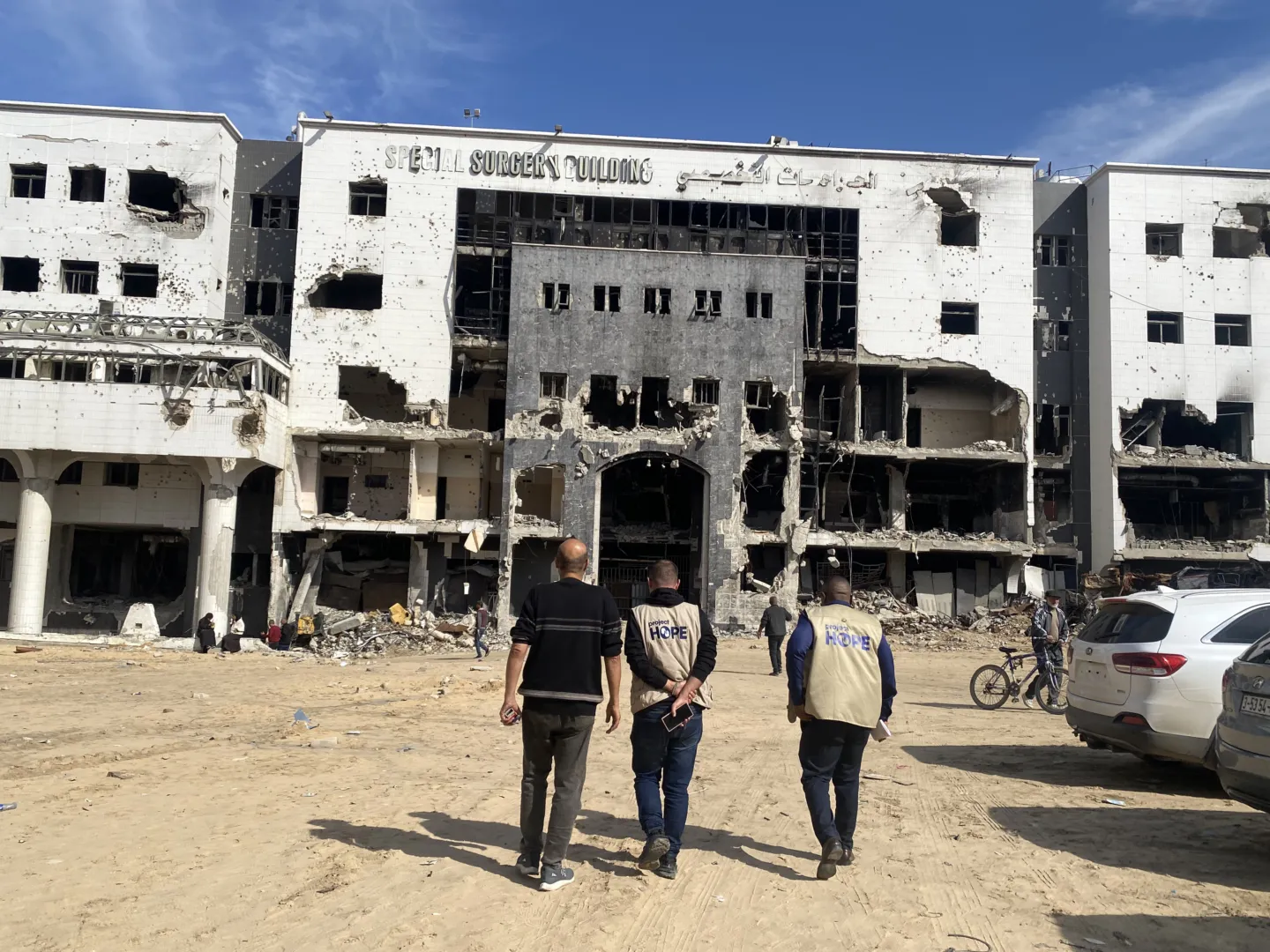
Over the past two and a half years of conflict in Gaza, the health sector has sustained $8.2 billion in damage and losses, setting back decades of progress in health outcomes. According to the 2026 Gaza Rapid Damage and Needs Assessment (RDNA) released by the EU and United Nations, the costs to rebuild and restore the health system are now projected to exceed $10 billion over the next decade.
“Supply and workforce shortages, and mass casualties have decimated Gaza’s health system over the past two and a half years. Even amid the ceasefire, malnutrition and disease outbreaks continue to plague health facilities due to a lack of adequate food supply and clean drinking water,” said Moses Kondowe, Project HOPE’s Director in Gaza. “Day in and day out, Gaza’s health workers continue to show up and do the impossible, but without a significant investment to restore health services, we can expect to see a rise in avoidable deaths for years to come.”
At a glance:
- Hospital Infrastructure: 94% of hospitals have been damaged or destroyed and more than 50% are completely non-functional.
- Health Worker Shortage: 14% of the health workforce has been lost.
- Gaps in Medicine: More than half (51%) of all essential medicines are unavailable.
- Maternal & Child Health: The number of high-risk pregnancies have doubled and mortality rates for children under five have spiked to 26.3 per 1,000 live births.
- WASH Risks: $1.7 billion in damage to water systems has triggered massive outbreaks, with respiratory and water-borne illnesses accounting for nearly a quarter of all medical consultations.
“Gaza today stands not only as a symbol of unprecedented destruction, but as a place where access to survival itself is increasingly denied. The crisis goes beyond what has been lost; it lies in what remains out of reach,” said Nirmin Akilan, a Project HOPE Pharmacist. “Even where services still exist, people are often unable to access them due to insecurity, displacement, and severe shortages. As a pharmacist, I see how the lack of medicines and the barriers to care are not isolated challenges, but part of a systemic breakdown. Recovery must therefore be measured not only by the reconstruction of infrastructure, but by restoring safe, consistent, and equitable access to essential services for all.”
To repair Gaza’s health systems, reconstruction must focus on robust service delivery, managing increased health risks, and strengthening the Health Information Management Systems to inform future decision-making and governance. Project HOPE has been working in Gaza to help deliver essential health services through primary and maternal health clinics, surge staff support for hospitals, trainings, and support for health workers, and the distribution of clean water.
In the past year, Project HOPE provided over 349,000 primary health consultations, distributed 9.7 million liters of clean water, and screened nearly 132,000 people for malnutrition, including during famine-like conditions — but much more support and investment is needed to ensure that the local health system can recover and address the exceptional level of need across Gaza. Your support not only meets immediate critical needs, but also assists efforts to recover, to rebuild, and to heal.
Access photos here. To learn more about Project HOPE’s programming in Gaza, please reach out to media@projecthope.org.