Living in the Trauma of a Storm Long Past
For the people of Jamaica, the impacts of Hurricane Melissa are still unfolding. In the hardest-hit areas, community members and health workers are finding moments of relief and care.
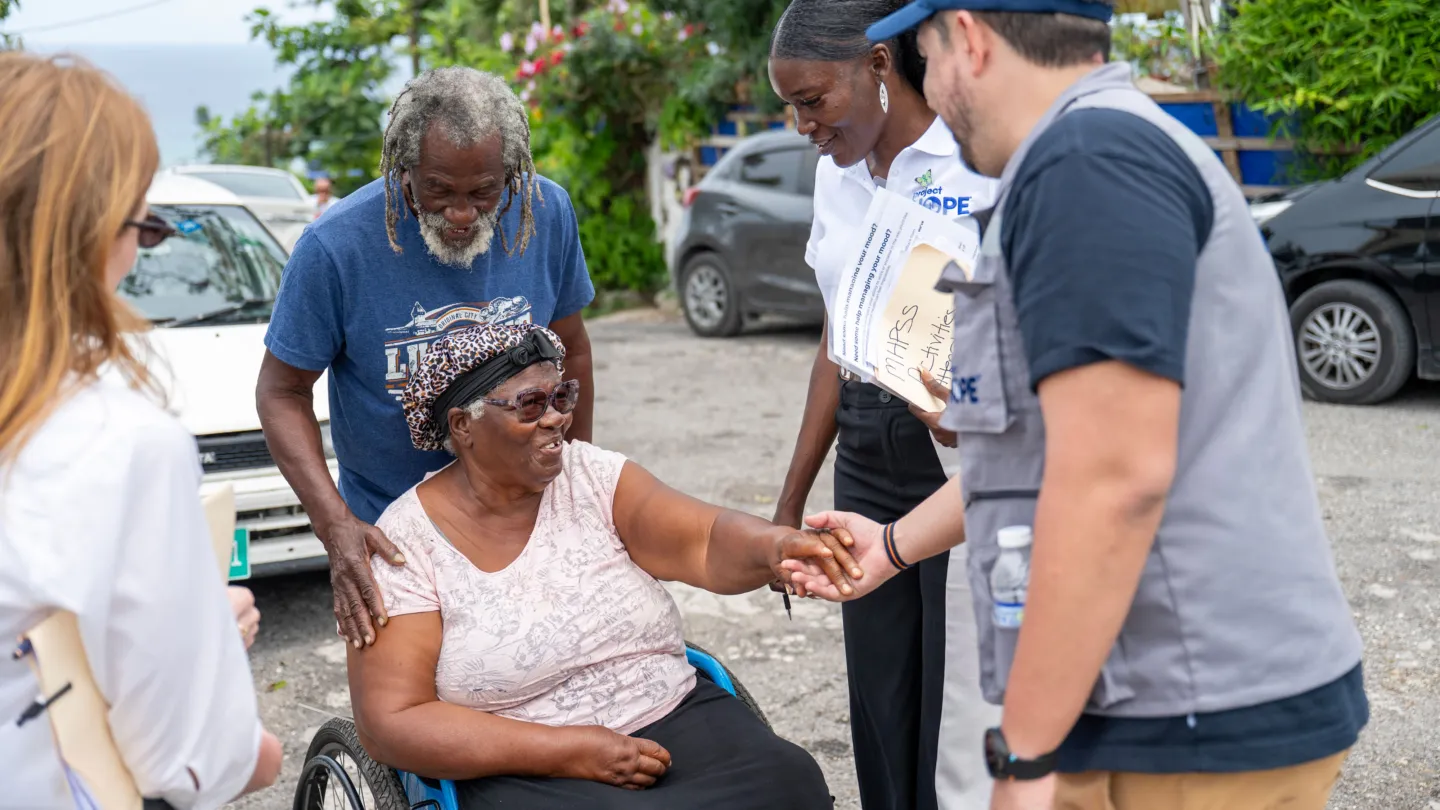
Six months after Hurricane Melissa tore across Jamaica, Sonia Dihnam still sleeps under a tarp.
The storm severely damaged the home she shares with her husband, her partner of more than 50 years, ripping off the roof and leaving it exposed to the elements.
When the storm came, water rushed into their house as the roof gave way. Sonia, who uses a wheelchair after a stroke, couldn’t move on her own.
“We were in the sitting room,” she said. “They pushed me to the bedroom and I went on the bed and I just sat there watching, watching with this stroke body.”
Once her husband and son got her safely to the bedroom, she watched as the storm moved through her home and across their property. It tore down her husband’s workshop, uprooted their fruit trees, and wiped out their flock of chickens — important sources of food and stability. They lived without electricity and running water for two months.
She is still living in the aftermath of it all.
The Category 5 storm was the strongest storm to ever hit Jamaica, bringing unprecedented rains, 185 mph winds, and gusts as high as 252 mph.
Nearly six months later, signs of physical damage are still everywhere. There are abandoned homes, structures covered by blue tarps, collapsed churches, and hospitals reduced to frames and debris — mountains of rubble where care centers once stood.
The emotional and psychological damages are harder to see, but carried by all. Last month, Sonia and her husband found a moment of respite at a mobile medical clinic run by Project HOPE.
Bringing mental health to the forefront
For many survivors, the impacts of a disaster like Hurricane Melissa do not end when the winds stop blowing. Hurricanes can have ripple effects that reverberate through communities and health systems for years. Damaged infrastructure, trauma and mental health challenges, the loss of prescriptions and medications, and limited access to care can all become lasting health crises in the aftermath of a powerful storm.
Across Jamaica, those long-term effects are becoming increasingly evident as time goes on.
“St. Elizabeth and Westmoreland were the hardest hit by the hurricane, and that’s where we’ve seen the greatest need, the highest number of patients, and where you see the problems becoming more acute,” shares Dr. Ilse Rendón, a medical volunteer with Project HOPE. “There are people who have gone four or five months without taking their medication, people who don’t have water or electricity, and perhaps they don’t realize the importance of keeping up with their health because, at this moment, it isn’t their priority — having a house and food is.”
Project HOPE has worked to ensure mental health services aren’t pushed to the wayside as communities recover and rebuild, operating mobile medical units to bring life-sustaining care to the most affected communities in St. James, St. Elizabeth, Westmoreland, and Trelawny parishes.
“A lot of individuals have experienced a lot of loss,” says Dr. Andre Carr, a Jamaican physician working with Project HOPE. “And to actually even just talk to a physician… was a healing hand to them.”
In the months since the storm, Dr. Carr has seen a rise in patients with hypertension and other chronic conditions, often worsened by stress. Others arrive to the clinics carrying anxiety, depression, and grief.
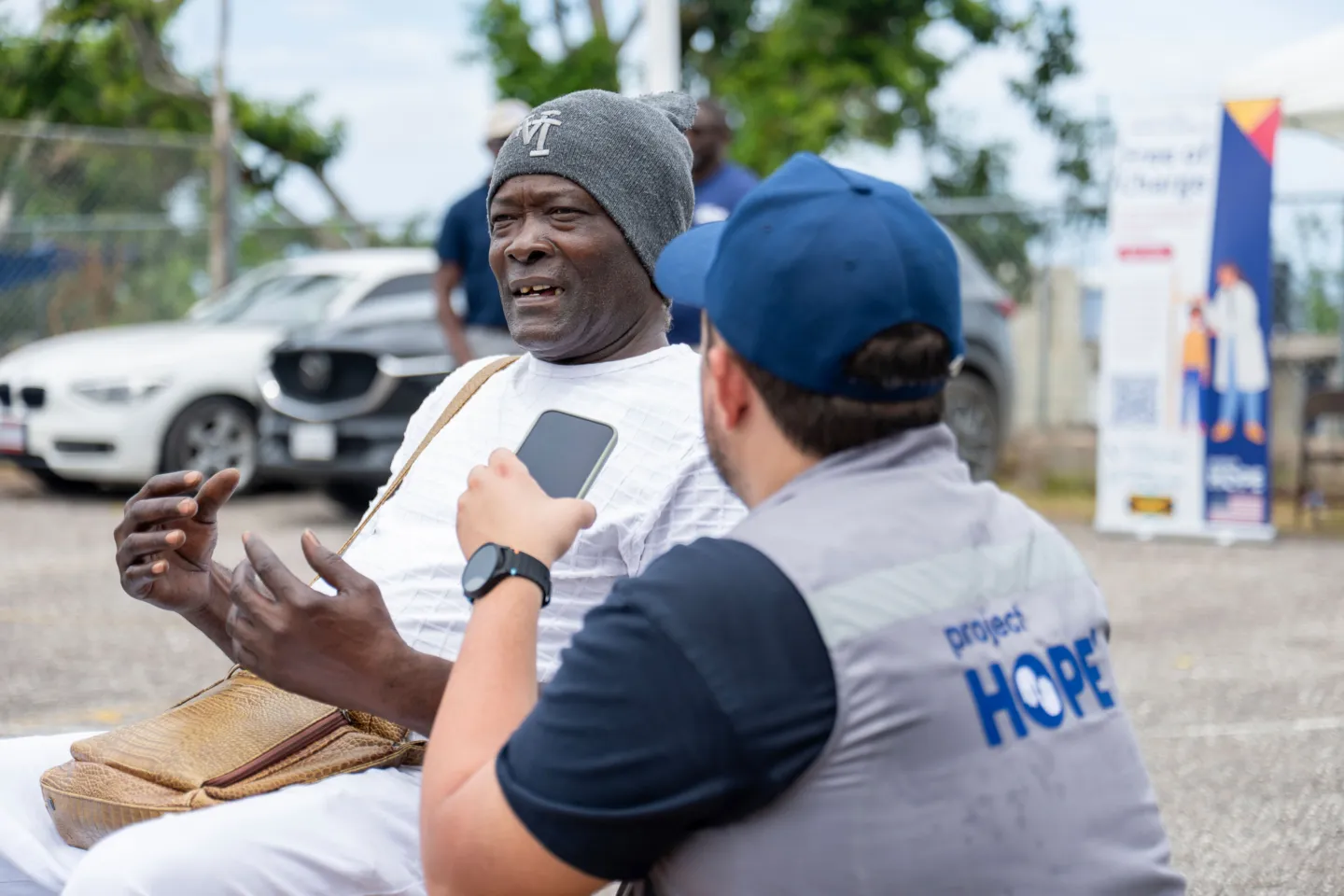
For 64-year-old chef Aggrey Campbell, those feelings showed up in ways he didn’t immediately understand. After losing his home in the storm, he began noticing lapses in memory and moments where he felt disoriented and disconnected from his surroundings.
“Melissa left me messed up,” he says. “I went inside the house four or three times for something and I forget… I keep looking straight… and people say, ‘What are you watching me for?’ But I wasn’t looking at them — I was looking far away.”
Now living alone in a rented home, Aggrey recently visited a Project HOPE mobile medical clinic in Barrett Town, where he received a check-up and found people to talk to.
What keeps him going, he says, is his work. While many lost their livelihoods, Aggrey is still able to cook and earn an income. In the kitchen, preparing seafood or baking, he finds a sense of rhythm and purpose. He is one of the luckier ones. For many others, this stability was disrupted and has yet to return.
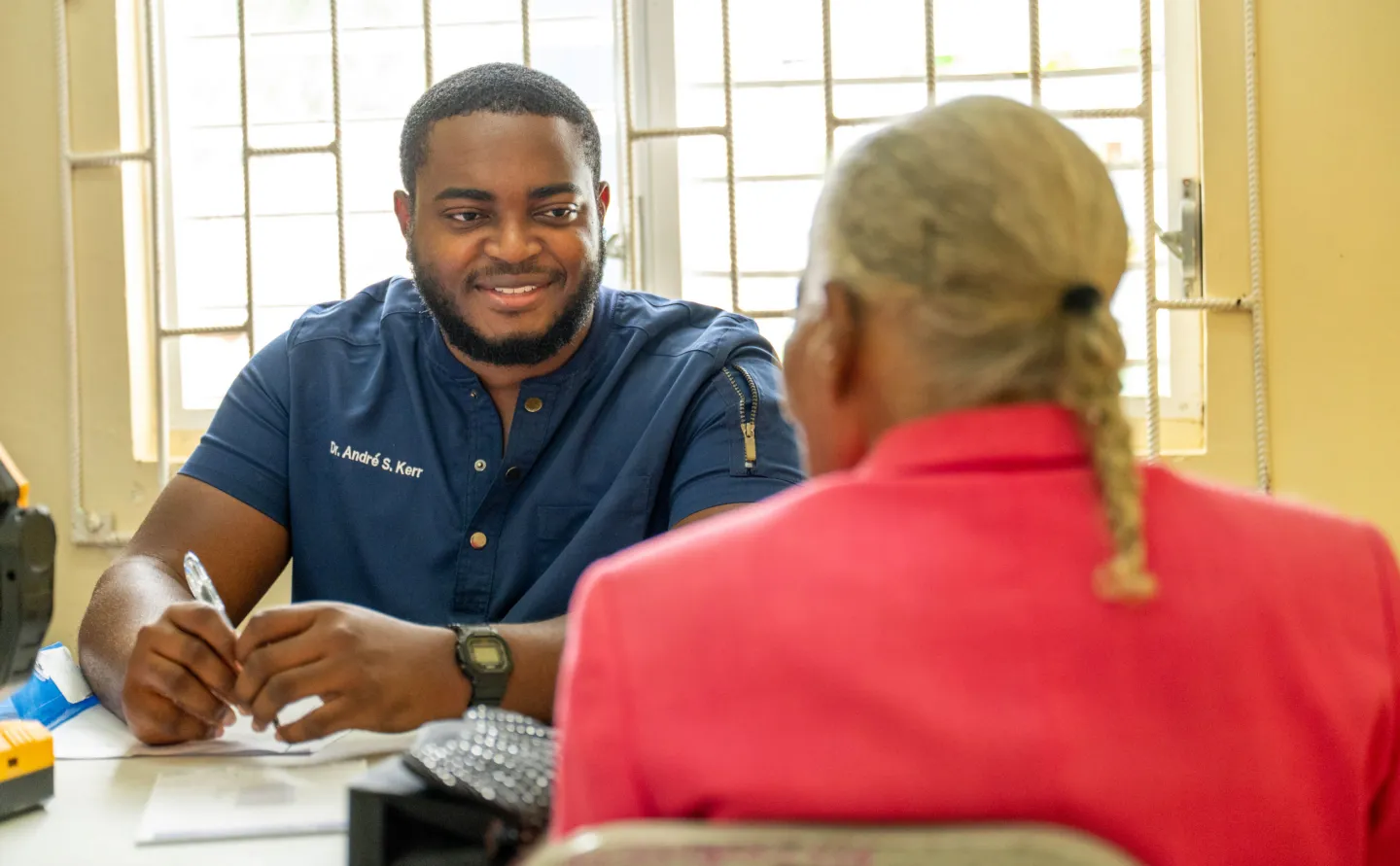
Dr. Andre Carr, a medical doctor and consultant for Project HOPE who has been responding to the hurricane’s impact in Jamaica since November.
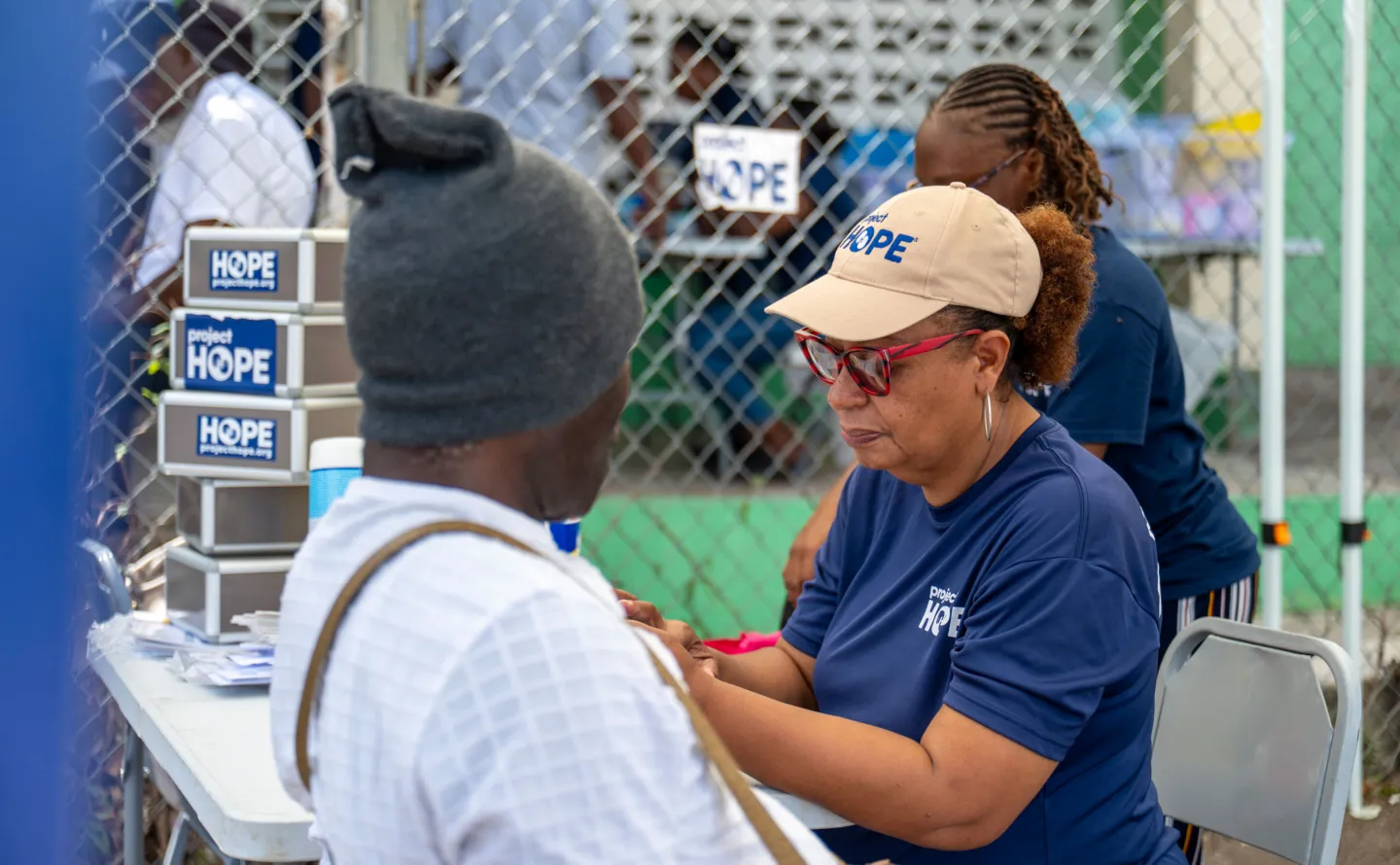
On March 27, Project HOPE hosted a mobile medical unit (MMU) in Barrett Town in the St. James parish of Jamaica where community members could access free medical care, mental health support, and hygiene kits.
Aggrey Campbell, a 64-year-old chef living in Barrett Town, that visited Project HOPE’s mobile clinic for a health checkup after experiencing significant trauma from Hurricane Melissa.
Delivering healing for health workers
Access to mental health support has been just as critical for frontline health workers caring for their communities.
In the hard-hit community of Black River, nurse Miledis Mcloaf works out of a clinic that operates out of tents. Months after the storm tore off her roof and forced her from her home, she returns to work each day, caring for patients facing many of the same challenges she is.
“It’s not easy,” she says simply.
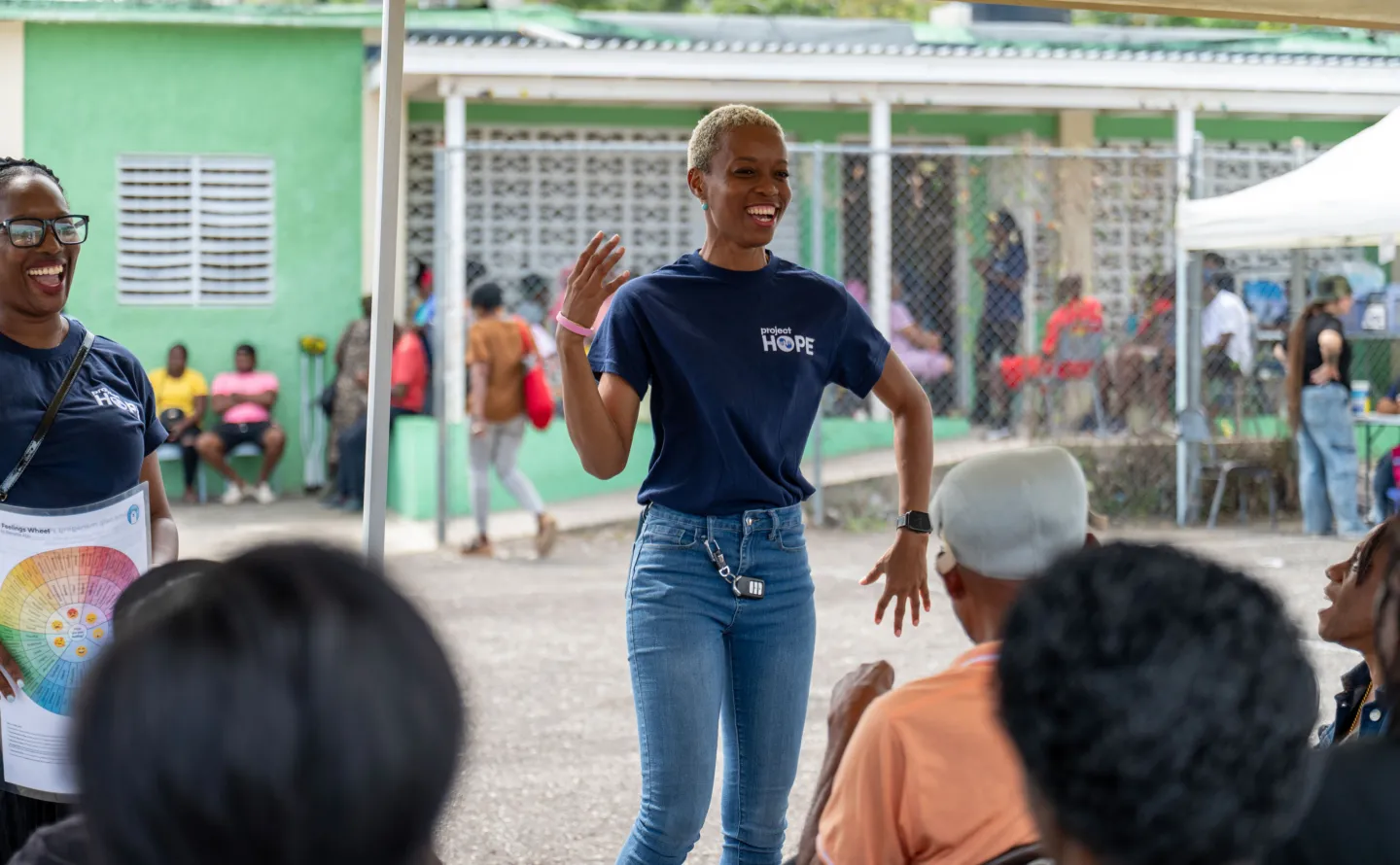
The long days, the high patient load, and the reality that both patients and providers are navigating ongoing loss have created a sustained level of pressure. For health workers like Miledis, mental health and resiliency trainings run by Project HOPE offer rare moments of relief — spaces to pause, connect, and process what they’ve been carrying, and even opportunities to dance and play.
Yudarthi Hernandez-Wilson, another nurse in Black River, remembers the moment she first returned to the town after the storm.
“The first day I came, I cried,” she says.
Entire buildings were gone. Roads were blocked. The 150-bed hospital and corresponding health clinic were in complete ruins. In a matter of days the health system had been upended, with clinics and hospitals forced to operate in tents and temporary spaces, rebuilding from scratch.
Today, people are managing chronic illness without consistent access to medication, and health workers continue to operate with constrained supplies and infrastructure as needs remain high.
Recovery, Yudarthi explains, is happening “little by little.”
But there are signs of healing. Access to mental health care has created space for Yudarthi and her colleagues to talk through frustration, grief, and exhaustion.
“If you are too frustrated… you have somebody that you can sit down and talk to,” Yudarthi says.
A bridge between disaster and recovery
For Sonia and thousands of others, recovery is still unfolding. Life has been interrupted and altered in ways that can’t be quickly rebuilt or repaired.
Families are rebuilding with limited resources — some still without reliable access to water or electricity, many balancing immediate survival with long-term health needs.
Visiting Dr. Carr at the Project HOPE clinic brought Sonia and her husband a sense of enjoyment and reassurance. After everything they had endured, seeing a doctor helped restore stability and served as a reminder that they are not navigating recovery alone.
For many across Jamaica, it is places like these clinics that will make true healing possible — offering not only care, but the support needed to keep going.