
United States & Territories
Responding to emergencies, improving access to health care, and implementing impactful public health programs
The Context
Despite significant advancements in research, practice, and policy, people throughout the United States and its territories face significant difficulties when accessing health care. People experiencing poverty and historically marginalized communities often do not have adequate access to health care and the entire country faces rising threats like infectious diseases, antimicrobial resistance, mental health issues, and chronic diseases like diabetes.
Local health systems are unable to meet health care needs without further support and health workers themselves continue to face significant challenges. Despite these obstacles, they remain resilient and can continue to evolve when equipped with the resources they need. Project HOPE collaborates directly with partners and communities in underserved regions, training frontline health workers, improving maternal and child health outcomes, procuring critical medical equipment, and building lasting programs that improve access to health care.

1 million
nurses are needed to address health workforce gaps
Rural areas are particularly affected by nursing shortages, making essential health care harder to reach for millions of Americans.

1 in 10
youth in the U.S. experience depression
Mental health conditions among young people severely impair their ability to function at school, work, home, with family, and in their social life.

35%
of counties in the United States are maternity care deserts
Without access to proper care, new mothers and infants are at an increased risk of harm. Right now, 25% of new mothers do not receive prenatal care in their first trimester.
Our Impact
Supporting the Frontline Health Workforce
At Project HOPE, we collaborate closely with partners to address local needs by training frontline and community health workers, strengthening local health systems, procuring critical medical equipment and supplies, and implementing health programs that improve access to care. To address health disparities and improve the health of communities, we collaborate directly with partners in underserved regions, including frontline health workers that serve rural populations, indigenous communities, people of color, young people, older adults, people living with disabilities, and populations in vulnerable positions.
Expanding Mental Health Support
Project HOPE has often supported the establishment of comprehensive mental health and well-being programs for those who need it most. We have collaborated with indigenous leaders, communities of color, health workers, and young people to adapt culturally appropriate mental health initiatives, address mental health stigma, and promote resilience. Project HOPE also works to raise awareness, support mental well-being, build the capacity of local partners, and provide support to affected populations.
To address health worker burnout, Project HOPE provided training on Mental Health and Resilience to frontline health workers, in collaboration with national and local partners including NYC Health & Hospitals, public health departments, and free and charitable clinics across the country.
In addition, Project HOPE’s Youth Mental Health program has trained young peer educators to engage youth in their communities, building awareness and the skills necessarily to reduce stigma, practice resilience, protect and maintain their mental well-being, and know when and how to seek help for themselves and others.
Addressing Infectious and Chronic Diseases
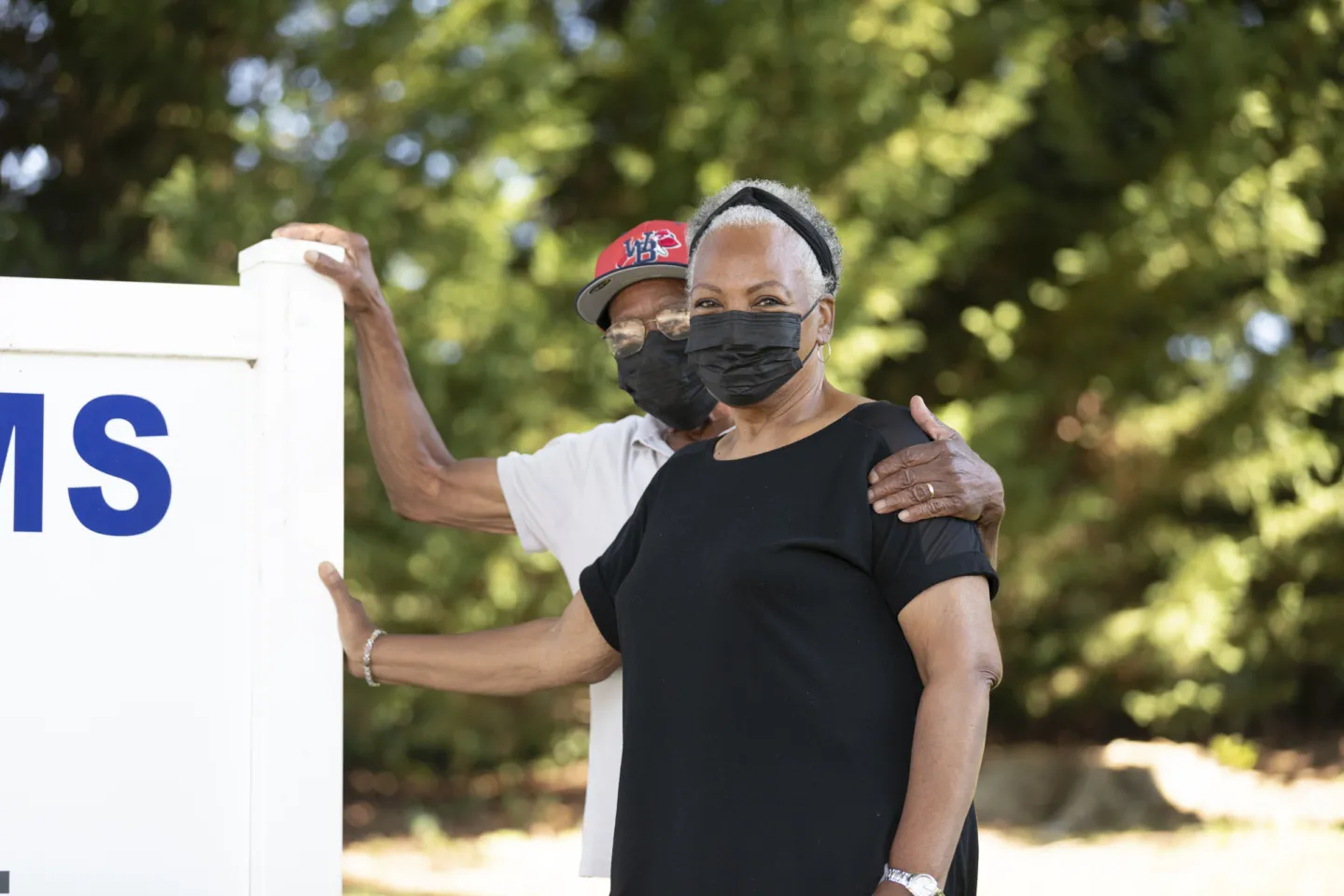
Project HOPE operates a robust approach to address both infectious and noncommunicable diseases in order to reduce health disparities and improve outcomes. In partnership with Moderna, Project HOPE is coordinating COVID-19 vaccine donations to free and charitable clinics countrywide. In addition, we have worked with the Illinois Department of Public Health to prevent the spread of infectious and respiratory diseases in skilled nursing facilities.
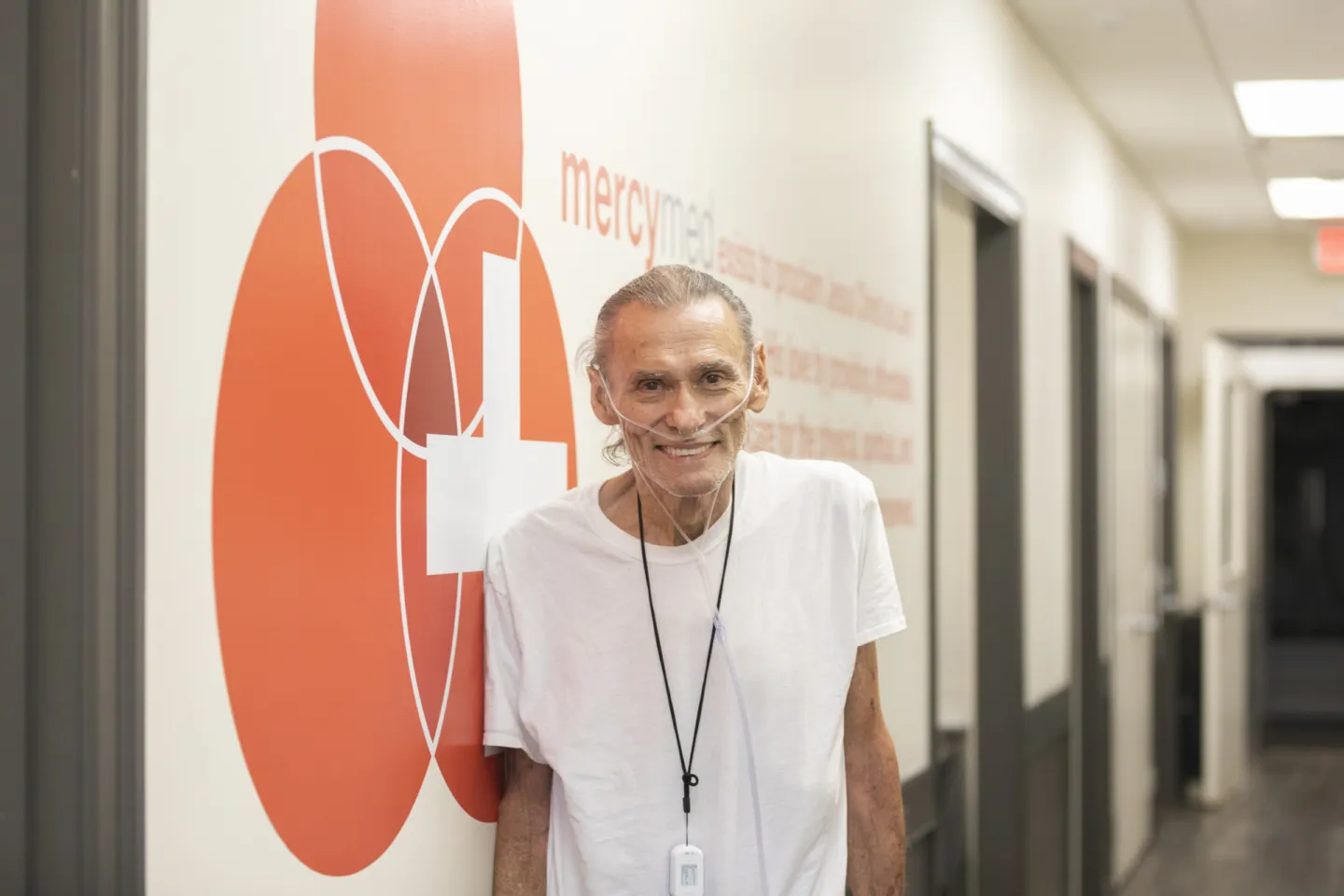
Project HOPE was instrumental in increasing vaccination rates in low-income and uninsured communities across Alabama, Florida, Georgia, Louisiana, and Texas with funding from the Health Resources and Services Administration (HRSA). With our support, a network of dozens of free and charitable clinics were able to improve outreach and hire community health workers who served as a critical link to build trust, combat misinformation, and reach the most underserved populations.
To address growing rates of noncommunicable diseases, Project HOPE collaborates with health workers to strengthen noncommunicable disease (NCD) and chronic disease programming for underserved communities. In emergency response situations, we deploy solar-powered cold chain storage systems, deliver insulin, and provide medical supplies needed for diabetes management. In addition, Project HOPE trains community health workers to promote NCD screening and support linkages to care through culturally and linguistically appropriate NCD programs that strive to reach medically underserved and underrepresented communities.
Responding to Disasters
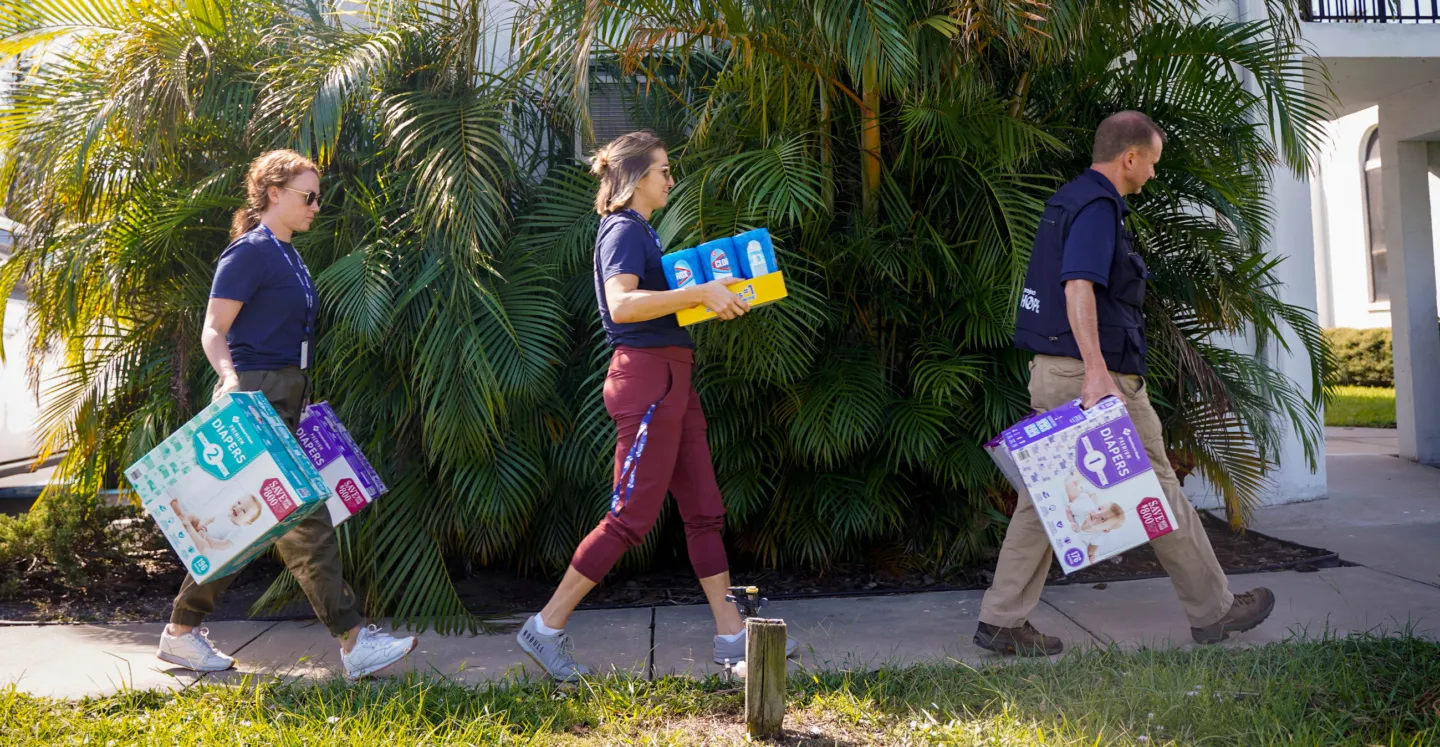
Project HOPE responds to extreme weather events, climate disasters, natural disasters, and health crises in the U.S., providing immediate relief and strengthening local health systems for long-term resilience. Our track record includes responding to the 2025 wildfires in Los Angeles, as well as hurricanes Fiona, Harvey, Helene, Ian, Ida, Idalia, Laura, Maria, and Milton. Our response strategies include sending surge medical volunteers to understaffed clinics and hospitals; distributing critical hygiene items and supplies to community-based organizations and shelters; procuring medical equipment, supplies, and medications for affected health facilities; distributing Kids Kits designed to promote psychological first aid; and providing mental health and resilience training for frontline health workers.
Our History in the United States & Territories
Founded in 1958 with headquarters in Washington D.C., Project HOPE’s work in the United States began in 1969, serving rural and medically underserved communities in the Southwest U.S. Over the years, we have continuously expanded our reach, responding to emergencies and implementing impactful public health programs across the country and territories.
In response to the COVID-19 pandemic, we delivered millions of pieces of personal protective equipment (PPE) to health systems across the U.S, while our medical volunteers provided care to thousands of patients and tested more than 25,000 people for COVID-19 across the country.
Project HOPE also has a long history of responding to natural disasters in the U.S. and territories. In 2005, we deployed medical volunteers in response to Hurricane Katrina in collaboration with the U.S. Navy’s efforts. When Hurricanes Harvey, Irma, and Maria struck in 2017, we sent medical volunteers to Texas, Florida, and Puerto Rico. In 2021, in the aftermath of Hurricane Ida, we worked with Louisiana health authorities and partners to respond to the needs of displaced populations by providing medical surge support and relief supplies. Our team responded to Hurricanes Helene and Milton in 2024 and we responded to the devastating wildfires in Los Angeles in early 2025.

Donate
Please give now to deliver urgent relief to people facing disasters and health crises — and make a lasting impact by rebuilding clinics, supporting health workers, providing mental health care, and more.

Join
Follow us on social media, share photos and videos of our work with your family and friends, and join our community of global health champions.

Fundraise
Whether you’re looking to host an in-person event, create your own fundraiser for your birthday, do a charity stream, or run a race, join our community of fundraisers!