Project HOPE Awarded InterAction’s 2026 Disability Inclusion Award
Project HOPE has been awarded the 2026 Disability Inclusion Award from InterAction for its work in Ukraine to strengthen physical and mental rehabilitation systems and promote accessibility and inclusion amid one of the world’s largest war-driven disability crises.
InterAction is the largest U.S.-based alliance of international non-governmental organizations (NGOs) and partners who collectively mobilize to serve vulnerable communities around the world. Each year, InterAction gathers to award organizations that have worked toward greater disability inclusion by taking exceptional, proactive, and innovative measures to integrate people with disabilities into their programs, activities, and operations.
“It is an honor to receive InterAction’s Disability Inclusion Award and have the people behind this work — our teams and partners across Ukraine who continue to show up every day, despite the war — be recognized,” says Marta Stoian, Mental Health and Psychosocial Support Specialist at Project HOPE, who accepted the award on the team’s behalf. “For Project HOPE, disability inclusion is part of how we understand recovery. It means ensuring people not only have access to rehabilitation and mental health support, but also the opportunity to rebuild their confidence, reconnect with their communities and know that they still have a place and a voice.”
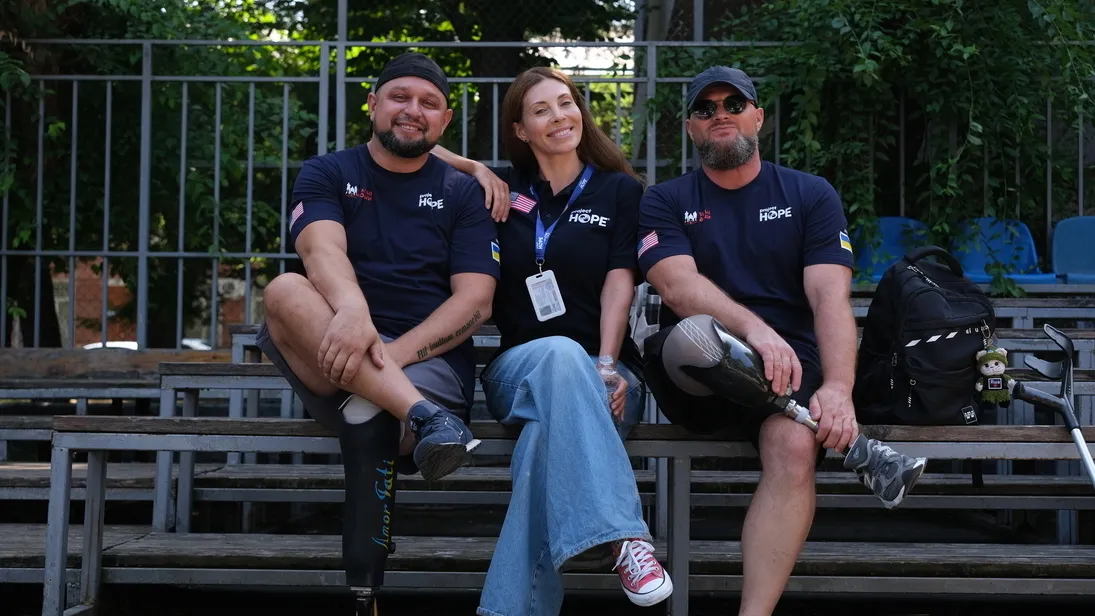
In Ukraine, it is estimated that over 100,000 people have lost limbs since the start of the full-scale war in February 2022. Understanding the increased need for accessible, high-quality rehabilitation and long-term support, Project HOPE’s team in Ukraine has worked to:
- Combat disability-related stigma by launching a national awareness campaign and conducting a baseline survey across six regions to better understand public attitudes toward disability and guide future programming through the five-year Rehabilitation for Ukraine (Rehab4U) program
- Conduct a comprehensive gap analysis identifying critical challenges across the continuum of care from emergency trauma response and prosthetic services to rehabilitation, mental health support, and community reintegration
- Create new opportunities for veterans living with war-related disabilities to participate in adaptive sports, building community and confidence as they transition back into their new normal as a civilian
- Provide capacity building, technical assistance, and equipment to local organizations leading community-based rehabilitation, so inclusive services continue long after the project ends
Project HOPE is proud of the team in Ukraine and the recognition of their commitment to disability inclusion. By combining health system strengthening, rehabilitation, local capacity building, and stigma reduction, the team has demonstrated that disability inclusion is not a standalone intervention but a cross-cutting commitment.
Access related photos here. To speak with an expert, email media@projecthope.org.